Why is my kitchen sink backing up in Lakewood?
Your Lakewood kitchen sink is backing up because grease, food waste, a disposal problem, or a blocked main line is stopping water from draining. Here is how to tell which one it is, and what to do about each.
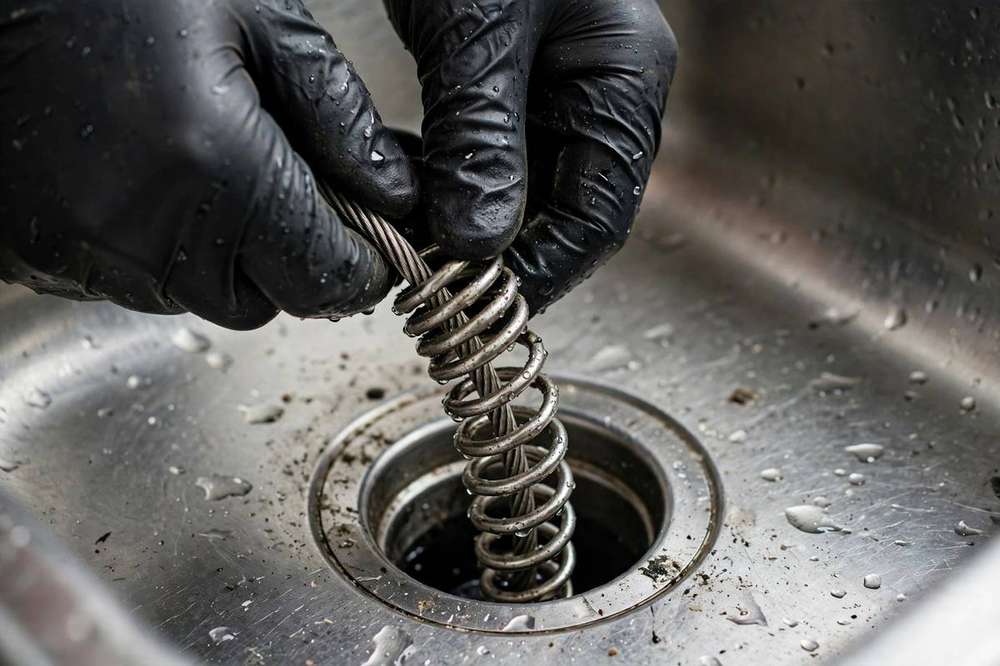
A kitchen sink that backs up is a different problem from a kitchen sink that drains slowly. A slow drain is an annoyance. A backup means water has nowhere to go, and it is coming back into the sink. The cause is usually one of four things: grease and food waste in the kitchen branch, a garbage disposal problem, a venting problem, or a blockage in the main drain or the sewer lateral. The first step is working out which one you are dealing with, because the fix is different for each, and the last one on the list is a reason to stop using water and call a plumber right away.
Grease is the usual cause
Cooking fat goes down the drain as a liquid, cools in the pipe, and hardens into a coating that catches food particles, coffee grounds, and soap residue. Over months the coating thickens until water can barely get through, and then a normal load of dishwater has nowhere to go and backs up into the sink. If the backup builds gradually, if the sink drains slowly for weeks before it finally backs up, and if the problem is limited to the kitchen sink, grease is the likely cause. Hot tap water can soften a fresh, thin grease coating, and a cup plunger can sometimes move a soft grease clog close to the sink. But a grease clog that has been building for months usually needs a cable or a water jet to clear the coating from the pipe walls, and that is a plumber's job. Chemical drain cleaners are a poor answer. They can damage older piping, they leave a caustic residue in the drain, and they rarely clear a grease clog fully. Our drain cleaning page explains how a plumber clears a grease-clogged kitchen line, and our hydro jetting page covers the water-jet method for heavy buildup.
The garbage disposal can be the problem
A garbage disposal that is jammed, worn out, or overloaded can back a sink up by itself. If the disposal hums but does not turn, it is jammed. If it does not turn on at all, check whether it has tripped its reset button, which is usually a small red button on the bottom of the unit. Press it once, and if the disposal starts, run cold water with it and feed it slowly. If the disposal is jammed with a utensil or a piece of food, turn the disposal off at the switch and at the breaker before you reach into it. Never put your hand into a disposal that is still connected to power. A disposal that jams repeatedly, leaks from the body, or grinds loudly is usually worn out and needs replacing. Grease, coffee grounds, pasta, rice, and fibrous vegetables do not belong in a disposal, and they are the most common causes of disposal-related backups in Lakewood kitchens. Scrape plates into the trash and wipe grease out of pans before washing. Our garbage disposal installation page covers replacement when a disposal is beyond repair.
The main line: the sign you must not miss
The most important distinction in a kitchen sink backup is whether the problem is in the kitchen branch or in the main drain. The signs of a main-line problem are clear, and they mean you should stop using water and call a plumber. If more than one fixture is backing up or draining slowly, if the toilet gurgles when the kitchen sink drains, if water comes up in a tub or a floor drain when you run the kitchen tap, or if the kitchen sink backs up when the washing machine or dishwasher runs, the blockage is in the main line or the sewer lateral, not in the kitchen. Continuing to run water only pushes more wastewater back into the house. Stop using water, including toilets and laundry, and call (720) 909-6690.
Main-line blockages in Lakewood are often roots in a clay lateral, a belly where the line sags, or a buildup of grease and waste that has collected over years. Lakewood's housing stock is old enough that many laterals are clay tile from the mid-century building era, and expansive bentonite soil shifts those lines and opens joints for roots. A camera inspection shows what is blocking the main line and where, and it is the right step when the backup is house-wide. Our sewer line repair page explains the options once the camera has shown the problem.
Venting can play a part
A venting problem can make a kitchen sink back up, or make it drain slowly and gurgle, even when the drain itself is clear. Plumbing vents run through the roof and let air into the drain system so water flows smoothly. When a vent is blocked by leaves, a bird's nest, or ice, the drain cannot breathe, and water drains poorly or backs up. The signs are a sink that gurgles, a drain that is slow only sometimes, and a smell of sewer gas near the sink. Clearing a vent means working on the roof, and diagnosing a venting problem means checking the whole drain system. That is a plumber's job, not a homeowner project.
What not to do
Do not keep running the tap to see if the backup clears. If the line is blocked, the water has nowhere to go, and it will come back into the sink or into a lower fixture. Do not pour chemical drain cleaner into a backing-up sink. It will not reach a main-line blockage, it can damage the piping, and it leaves a hazardous residue for anyone who later opens the drain. Do not use a plunger aggressively on a sink that is backing up into other fixtures. Plunging pushes water through the system, and if the blockage is in the main line, that pressure goes toward the lowest fixture in the house, which may be a tub or a floor drain.
Do check the simple things first. Make sure the disposal is running and not jammed, make sure the sink strainer is clear, and note whether any other fixture is affected. That information is exactly what a plumber will ask for when you call. If the backup is limited to the kitchen sink, you have time to plan. If more than one fixture is involved, or if sewage is coming up anywhere in the house, stop using water and call a plumber right away.
A kitchen sink backup is a nuisance when it is grease in the kitchen branch, and it is an emergency when it is the main line. Knowing the difference is what keeps a clogged sink from becoming a sewage backup in the house. If your kitchen sink is backing up in Lakewood, call Emergency Plumber Lakewood at (720) 909-6690. We are open 24 hours, every day.
Get help with plumbing in Lakewood
If you would rather have a plumber take it from here, call Emergency Plumber Lakewood at (720) 909-6690. We serve homes across Lakewood, and we are open 24 hours, every day.
Answers to common questions
Why is my kitchen sink backing up in Lakewood?
Usually grease and food waste in the kitchen branch, a jammed or worn garbage disposal, a venting problem, or a blockage in the main drain or sewer lateral. If more than one fixture is affected, the blockage is in the main line.
How do I know if a kitchen sink backup is a main-line problem?
If more than one fixture is backing up or draining slowly, if the toilet gurgles when the sink drains, if water comes up in a tub or floor drain when you run the tap, or if the sink backs up when the washing machine or dishwasher runs, the blockage is in the main line. Stop using water and call a plumber.
Can a garbage disposal cause a kitchen sink to back up?
Yes. A jammed, worn out, or overloaded disposal can back a sink up by itself. Check the reset button, and never put your hand into a disposal that is still connected to power. Grease, coffee grounds, pasta, rice, and fibrous vegetables do not belong in a disposal.
Should I use a chemical drain cleaner on a backing-up sink?
No. Chemical cleaners can damage older piping, leave a caustic residue for anyone who later opens the drain, and will not reach a main-line blockage. They rarely clear a grease clog fully.
What should I do if sewage is backing up into my kitchen sink?
Stop using water in the house, including toilets and laundry, and call a plumber right away. Continuing to run water only pushes more wastewater back into the house.
Sources
- Lakewood Municipal Code, Chapter 14.05 — 2021 International Plumbing Code — drainage and venting requirements for Lakewood homes.