Sized for Lakewood, not sea level
At Lakewood’s elevation a gas unit loses about 4% of its input per 1,000 feet above 2,000 feet. We size one up from the sea-level chart, so the new tank actually keeps up in February.
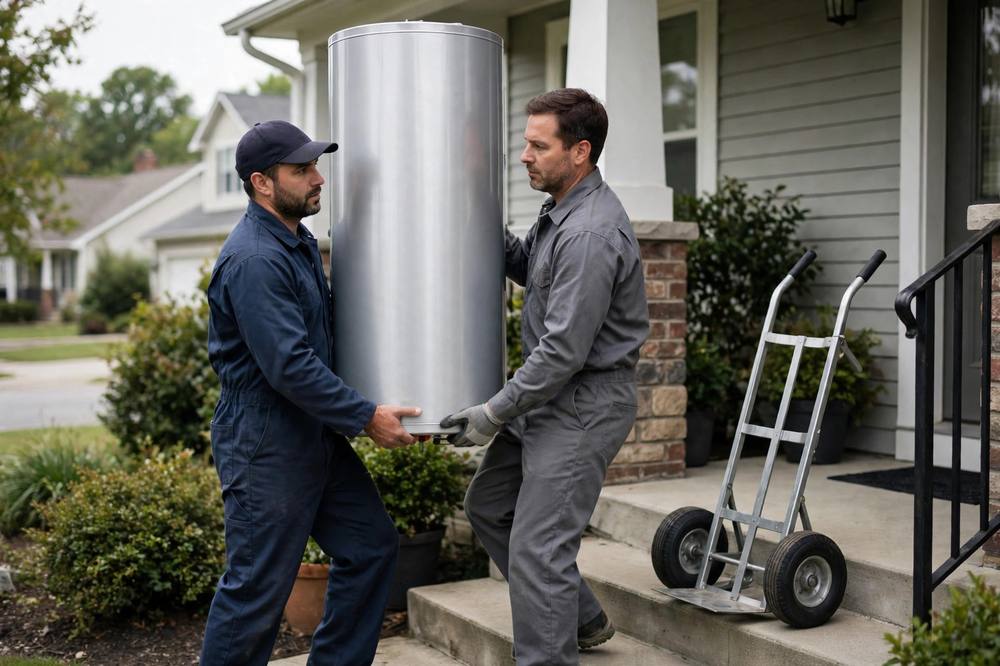
water heater replacement Lakewood CO — When the tank itself has failed, a repair will not hold — and the honest answer is a replacement. Water heater replacement in Lakewood, CO, means a new tank sized for Lakewood’s altitude, installed to code, and permitted. Call (720) 909-6690. We are open 24 hours, every day, from 200 Union Blvd in Lakewood.
At Lakewood’s elevation a gas unit loses about 4% of its input per 1,000 feet above 2,000 feet. We size one up from the sea-level chart, so the new tank actually keeps up in February.
Water heater replacement needs a permit. Fees are valuation-based, so we confirm the fee with the Lakewood Permit Counter at 303-987-7500.
You hear what the replacement involves — sizing, venting, gas or electric supply, and the permit — before any work starts.
We work in Lakewood’s neighborhoods every day, from Applewood to Green Mountain, and we stand behind the work we leave behind.
A replacement covers the old tank out, the new tank in, and the checks that make the new unit last in Lakewood’s water and altitude.
We size the new tank for Lakewood’s elevation and your household’s real February demand — not the sea-level chart on the box.
The failed tank is drained, removed, and hauled away, and the work area is left clean.
The vent, gas line, or electrical supply is checked and brought to the standard the new unit requires.
The replacement is permitted with the City of Lakewood, and the work is done to the 2021 International Plumbing Code.
The new tank starts clean, and we set the yearly flush and anode rod check that keeps it alive in Lakewood’s hard water.
A tank that has failed will not fix itself. Call any hour and talk to the Lakewood team about the replacement.
Water heater replacement in Lakewood is a sizing job before it is an installation job. At about 5,518 feet, a gas water heater loses roughly 4% of its rated input for every 1,000 feet above 2,000 feet — a nominal 40,000 BTU tank unit realistically delivers around 34,000 BTU. February inlet water is far colder than summer water, so the tank works harder and recovers slower in the coldest month. A replacement sized from the sea-level chart will run out of hot water in February, and the household will blame the new tank for a sizing decision made on paper.
Most tanks in Lakewood conditions last about 8 to 12 years. When the tank itself leaks from its shell, is rusted through, or is past that life, water heater repair is no longer the honest answer. A replacement in Lakewood needs a permit, and permit fees are valuation-based under the city’s current fee resolution — there is no flat fee to quote, so confirm the fee with the Lakewood Permit Counter at 303-987-7500. And if you are weighing a tank against a tankless unit, the comparison below is the short version; the full tankless discussion lives on our tankless water heater installation page.
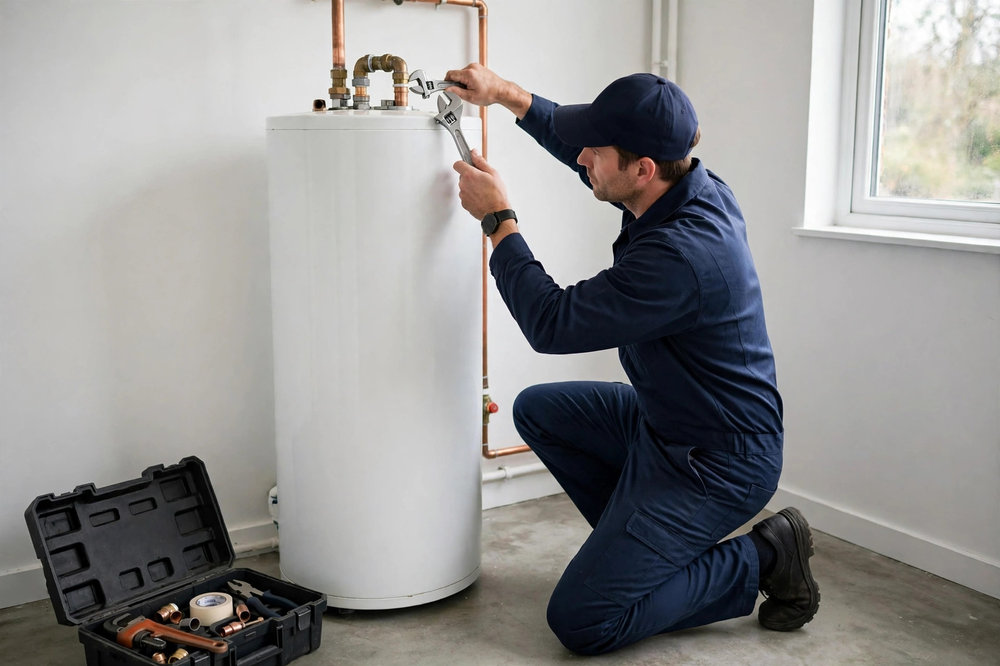
Both heat water. They are different jobs, and the honest choice depends on the house, not the brochure. A tank heats and stores water; a tankless heats it as it flows. In Lakewood, altitude and February inlet water shape both.
| Factor | Tank water heater | Tankless water heater |
|---|---|---|
| How it works | Heats and stores 40–50 gallons, reheats as it is used | Heats water as it flows, with no stored supply |
| Hot water supply | Limited by tank size; runs out, then recovers | Continuous, limited by flow rate, not by a tank |
| Lakewood altitude | Loses about 4% input per 1,000 ft above 2,000 ft; size one up from the sea-level chart | Flow ratings fall when the real February temperature rise is about 70°F, not the 35–45°F on the box |
| Hard water | Scale builds in the tank; yearly flush and anode check | Scale narrows the heat exchanger; yearly descaling |
| Permit | Required in Lakewood; fees are valuation-based | Required in Lakewood, with venting and gas sizing reviewed |
| Best fit | Most Lakewood homes, especially smaller households | Larger households with simultaneous showers and laundry, where the gas line and venting allow it |
If you are weighing the two, see tankless water heater installation for the tankless side of the decision — including when it is not worth the conversion.
We confirm the tank has failed — a leak from the shell, rust through, or age past its useful life — and that replacement, not repair, is the honest answer.
We size the tank for Lakewood’s altitude and your household’s real demand, including February inlet temperatures.
The replacement is permitted with the City of Lakewood, with valuation-based fees confirmed at the Permit Counter, 303-987-7500.
The old tank is drained, removed, and hauled away. The new tank is set, connected, vented, and filled to the 2021 International Plumbing Code.
We set the temperature, test the supply and relief valve, and walk you through the yearly flush and anode rod check that keeps the new tank alive.
Compares the unit’s rated input against what Lakewood’s elevation actually leaves — about 4% less per 1,000 feet above 2,000 feet.
Drains and removes the failed tank cleanly, without flooding the utility room on the way out.
Confirms the vent and gas supply meet the new unit’s requirements before it fires for the first time.
Confirms the relief valve opens at the right pressure and the supply pressure is in range.
Confirms the hardness the new tank will face — about 105 mg/L in Lakewood — so the flush and anode plan matches the water.
Water heater replacement in Lakewood needs a permit, with fees based on the valuation of the work. We confirm the fee with the Permit Counter at 303-987-7500.
Lakewood has adopted the 2021 International Plumbing Code. Replacements are done to that standard, and inspected.
We match the installation to the existing system — gas or electric, copper or PEX supply — so the new tank behaves like the rest of the installation.
Sets the yearly flush and anode rod check that decides how long the new tank lasts in Lakewood’s hard water.
The tank leaks from its shell on a cold night. A repair cannot fix rusted steel, so we drain it, remove it, and install a replacement sized for the household and the altitude.
The tank is past its useful life and the element has failed. We explain the replacement option instead of selling a repair that will not hold.
The unit was sized for sea level and never kept up in February. The replacement is sized one up, and the household finally has hot water in winter.
Two showers and a laundry running at once point to tankless — but only if the gas line and venting allow it. We walk through the comparison honestly, including when tankless is not worth the conversion.
A replacement is a sizing job before it is an installation job, and the sizing is done for February, not July. We count the household — showers, laundry, and how often they run at once — then size against the coldest inlet water of the year, at Lakewood's altitude, where a gas unit gives up part of its rated input. The install day itself is sequenced: drain and disconnect, venting and gas line checked, new unit set and piped, permit and inspection closed out. The houses below are where the sizing decision changes most.
1950s brick ranches with galvanized supply, plus manufactured homes on piers or crawlspace. Tanks on piers face crawlspace freeze exposure a basement ranch does not.
Horse lots beside multifamily on the same block. A large-lot home and an apartment building need different sizing, different venting, and different access.
The 1889 Lakewood Subdivision and the oldest street grid in the city. Pre-1940 homes may still carry lead-era service lines, checked before any repipe is planned.
Two stories on one page: 1940s–70s single-family tanks and 2004-and-later condo closet units with shared risers and HOA common lines.
At Lakewood's altitude a gas tank gives up part of its rated input, so the replacement is usually one size up from what the sea-level chart suggests.
Replacement needs a City of Lakewood permit, and fees are valuation-based under the city's fee resolution. Confirm the fee with the Permit Counter at 303-987-7500.
The vent path and gas line are checked before the new unit is set. A tankless conversion needs a larger gas line and new venting — sized, not guessed.
The new unit is judged against February, when inlet water is coldest and recovery is slowest. A tank that only passes in July is not a pass.
The failed tank is drained, disconnected, and hauled away, and the new unit's permit sign-off goes on file with the house.
The tank rusted through and leaked into the utility room on a cold night. The unit was old enough that a repair did not make sense.
We drained and removed the failed tank and installed a replacement sized for the household and the altitude, set the temperature, and tested the supply and relief valve. Hot water was back the same visit.
Maintenance: Flush the tank once a year and check the anode rod. A worn anode rod is what lets a tank rust from the inside.
The household ran out of hot water every winter, but the tank worked fine in summer. The unit had been sized for sea level, not for Lakewood.
The replacement was sized one up from the sea-level chart, with February inlet temperatures in the calculation. The household has hot water in winter now.
Maintenance: If a tank only struggles in winter, the problem is usually sizing, not a broken part. Ask for the altitude calculation.
The household wanted endless hot water, but the gas line and venting could not support a tankless unit without major work. The conversion was not worth it for them.
We installed a correctly sized tank instead, with the yearly flush and anode plan, and explained the tankless requirements honestly so the household could decide with the full picture.
Maintenance: Tankless is not the right answer for every home. The gas line, the venting, and the descaling plan decide it — not the brochure.
A new tank solves the problems a repair cannot: a failed shell, a tank past its life, and a unit that was never sized for Lakewood. These are the failures we get called for most.
A tank leaking from its shell cannot be repaired. Rust through means the steel is gone, and the replacement is the only honest answer.
Most tanks in Lakewood conditions last about 8 to 12 years. A tank past that age with a failed part is a replacement candidate, not a repair.
A unit sized for sea level delivers about 4% less per 1,000 feet above 2,000 feet. The replacement is sized one up from the sea-level chart.
A worn anode rod lets the tank rust from the inside. By the time the water runs rusty, the tank is usually past saving.
We have replaced water heaters through every kind of Lakewood building stock, from 1940s homes with tanks in crawlspaces to newer builds with closet mechanicals. That range means we know how to size for the altitude — and when a tankless unit is not worth the conversion.
Arrived in less than an hour and completed the job in less than two hours for a very good price.
Emergency Plumber Lakewood came through for me when I had a problem with my water. They were easy to work with, explained everything, and got it fixed fast. I’d definitely call them again and recommend them to anyone who needs a plumber. 5 stars!
great service
When the failure is the tank, not a part. A shell leak, rust-through, or a tank past its 8-to-12-year life in Lakewood conditions means a new unit — parts cannot fix a failed shell. The decision is made at the tank: we check the shell, the anode rod, and the age together, and if the shell is sound, the honest answer is usually a repair, not a replacement.
By February, not by the box. We count the household — showers, laundry, and how often they run at once — then size for the coldest month, when inlet water is at its coldest and the unit works hardest. At Lakewood's altitude a gas tank gives up part of its rated input, so the unit that copes in July can run short in February. That is why the replacement is usually one size up from what the sea-level chart suggests.
Yes, and we arrange it. A water heater replacement is permitted work in Lakewood, and the fee follows the job's valuation, so there is no flat figure to quote. The Permit Counter at 303-987-7500 confirms the fee for the specific job, and the permit sign-off goes on file with the house.
A tank fits most Lakewood homes, especially smaller households. A tankless unit fits larger households with simultaneous showers and laundry — if the gas line, venting, and yearly descaling plan allow it. The comparison table above lays out the differences; the full tankless discussion is on our tankless water heater installation page.
Not seeing your question? Call the local team at (720) 909-6690 and describe what is happening — we will tell you honestly whether it needs a crew now.
Ask the local teamReach us any hour at (720) 909-6690. A real person answers, day or night. Tell us how old the tank is, whether it is leaking, and how many people use hot water — that shapes the sizing.