Camera first, every time
We scope the line before quoting a repair, so the fix matches the actual failure — not a guess made from the surface.
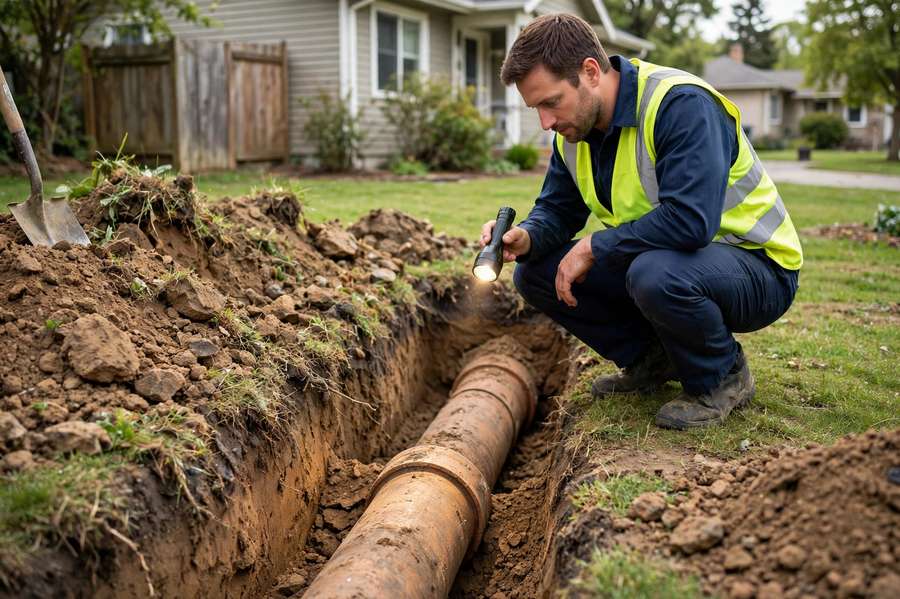
sewer line repair Lakewood CO — A sewer line that backs up every few weeks is not a drain problem — it is a pipe problem. Sewer line repair in Lakewood, CO, starts with a camera, so the failed section is found before anything is dug up. Call (720) 909-6690. We are open 24 hours, every day, from 200 Union Blvd in Lakewood.
We scope the line before quoting a repair, so the fix matches the actual failure — not a guess made from the surface.
A cracked joint or a root-damaged section gets a targeted repair. We do not sell a full replacement when a section will hold.
You see the camera footage, hear what failed, and learn what the repair involves before any digging starts.
We work in Lakewood’s neighborhoods every day, from Applewood to Green Mountain, and we stand behind the work we leave behind.
Sewer line repair covers the lateral from the house to the district main — and the diagnosis that tells you whether a repair is enough.
We scope the lateral and show you the footage: cracks, roots, bellies, separated joints, or Orangeburg pipe. See sewer camera inspection.
A failed joint or a cracked section is repaired in place. The line keeps the sections that are still sound.
Roots are cut and the line is jetted clear, so flow is restored and the joint can be inspected properly.
Bentonite clay soil pulls joints apart and creates bellies where water sits. We show you what the camera found and what it means.
We restore the work area, run water to confirm flow, and walk you through the footage and what to watch for next.
A sewer backup will not fix itself, and it will not wait. Call any hour and talk to the Lakewood team.
Sewer line repair in Lakewood is the work of fixing a lateral that has reached the end of its life. Lakewood’s median year built is 1977, and 56% of homes were built before 1980. Homes of the 1940s–50s era typically have clay-tile laterals; 1960s–70s homes typically have clay, cast iron, or Orangeburg — a tar-paper pipe that collapses with age. Those materials are now 50 to 80 years old. Add expansive bentonite clay that swells when wet and shrinks when dry, pulling joints out of alignment, and cottonwood, elm, and willow roots finding every gap, and the lateral fails in the same few ways: cracks, separated joints, bellies, and root intrusion.
Repair means fixing a section and restoring the existing line. Replacement means the line is collapsed, bellied along its length, or has nothing left to bond to — and that is a different job, covered on our sewer line replacement page. The camera draws the line between the two. In most Lakewood districts the homeowner owns the lateral to the main, so the repair is the homeowner’s to arrange — confirm the boundary with your district before work starts.
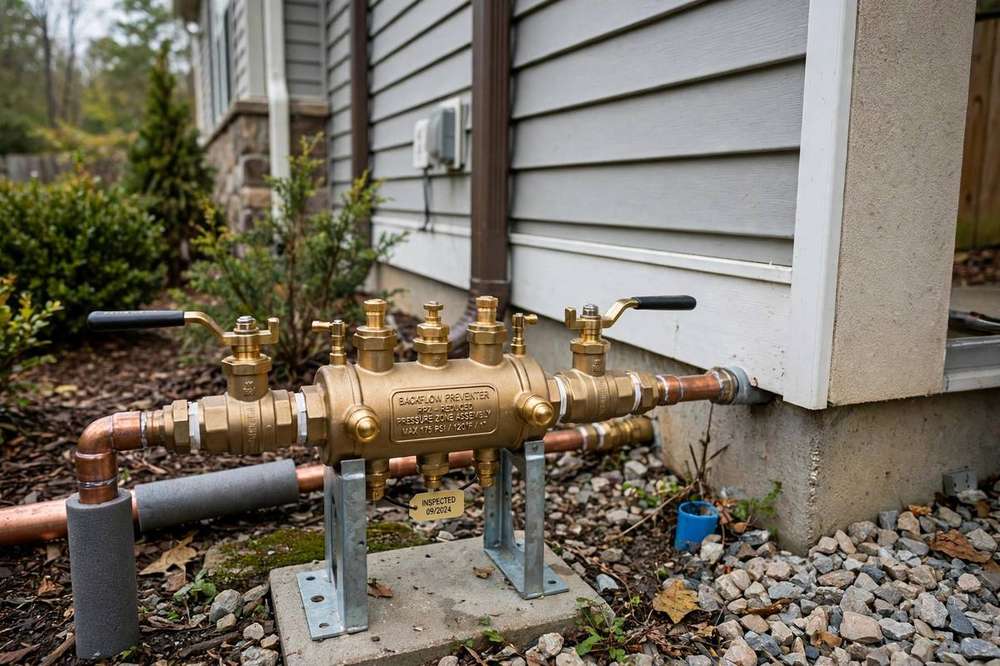
Repeated backups, a smell, a soggy yard, or gurgling fixtures — each points to a different failure, and each shapes where the camera goes first.
We scope the line from the cleanout and record the footage. You see the cracks, roots, bellies, or Orangeburg on screen.
A failed section gets a repair. A collapsed or long-bellied line gets a replacement conversation. We show you the footage and explain which side of that line your pipe falls on.
We expose the failed section, repair or replace it, and restore the line with matching material, to the 2021 International Plumbing Code.
We run water at full flow, camera the repair to confirm it, restore the work area, and walk you through the footage and what to watch for.
Shows cracks, roots, bellies, separated joints, and Orangeburg in the lateral — the diagnosis every repair starts from.
Cuts roots and washes scale out of the line so the camera sees the pipe, not the blockage.
Clears the line so the camera can travel the full run from the house to the main.
Finds the lateral’s path and depth from the surface, so digging starts in the right place and stays there.
Confirms the repaired section holds and the line flows at full capacity before the work area is restored.
For sewer problems, the camera goes in before the tools come out. Seeing the failure on screen tells us whether a repair, a lining, or a replacement is the honest answer.
Lakewood has adopted the 2021 International Plumbing Code. Sewer work is done to that standard, and permits are pulled where the city requires them.
We match the repair to the existing system — clay, cast iron, Orangeburg, or PVC — so the joint behaves like the rest of the line.
Where the line allows it, lining or pipe bursting can repair the lateral without a full trench. See trenchless sewer repair for when that fits.
Lateral work that reaches a sidewalk or street needs the right permits. We confirm what the city requires before digging.
The camera shows root intrusion at a clay joint and a belly just past it. We repair the failed section and jet the line clear, instead of a fourth clearing.
The lateral is leaking at a separated joint. We expose the section, repair it, and the yard dries out.
The camera shows Orangeburg pipe that has gone soft and oval. A section repair is a stopgap, so we explain the replacement option honestly.
A belly in the lateral holds water and backs gas up through the traps. The camera finds the belly, and we explain whether a repair or a regrade is the answer.
A sewer line repair is a targeted fix: one failed section, not the whole run. The camera finds the joint or section that failed — a crack, a root-damaged joint, a short belly — and the repair replaces or lines that section while the rest of the lateral keeps working. That is the whole discipline of the job: knowing when a section will hold and when the damage along the run means the line is done. A repair sold where a replacement is needed fails within months; a replacement sold where a repair would hold wastes a good lateral. The houses below are where the section-versus-run decision is made most often.
The deepest era stack in Lakewood, with 1950s–70s laterals approaching 50 to 70 years of service and clay-heavy soils. Section repairs cluster at the worst joints.
1959–67 ranches with the highest Orangeburg-risk profile in the city, plus long laterals under mature-tree lots where roots compound every failure.
1940s wartime workers' housing with clay laterals, plus duplex-zoned lots with shared-wall drain configurations a single-family repair would miss.
Lakewood's oldest central stock, 1940–59, with long laterals under no-sidewalk horse lots. A repair here is planned as a long run, not a short dig.
One cracked joint or root-damaged section, excavated and replaced. The rest of the lateral stays in the ground and keeps working.
A short liner inside the failed section, where digging is not the right answer. The host pipe has to be sound enough to hold it.
A damaged or missing cleanout is rebuilt so the line can be camera-checked and cleared again. Access is part of the repair.
A cable cuts roots; it does not fix the joint they came through. The camera shows whether cutting is enough or the joint needs replacing.
Damage at several points along the run, a long belly, or a collapsed section means the line is done. The camera footage is what says so.
The basement backed up three times in two months. Each clearing fixed it for a few weeks, then it returned.
The camera showed root intrusion at a clay joint about 30 feet out. We repaired the failed section, jetted the line clear, and verified flow with a second camera pass.
Maintenance: Camera the line every couple of years on mature-tree lots, and avoid flushing wipes that catch on roots and start the clog.
A soggy, sunken patch appeared in the yard over the lateral, and the house smelled faintly of sewage after heavy rain.
We located the lateral, exposed the separated joint, repaired it with matching material, and restored the yard. The smell stopped and the ground dried out.
Maintenance: A soggy patch over the lateral is never just a wet lawn. Call while it is a joint repair, not a yard replacement.
The camera showed Orangeburg pipe that had gone soft and oval, with the line narrowing along its length. A section repair would not have held.
We explained the footage honestly: the line needed replacement, not another repair. The household got a clear picture of the options instead of a repair that would fail within the year.
Maintenance: If the camera shows Orangeburg, ask to see the footage. It is the one material where a repair is usually a stopgap.
Most sewer problems are cheaper to fix when the camera finds them early and expensive once the line collapses. These are the failures we get called for most.
A line that clears with a cable but backs up again in weeks is not a clog — it is structural. The camera shows whether it is roots, a belly, or a separated joint.
Roots find clay joints and grow into the line. We cut them, jet the line clear, and camera the joint to show whether a repair is needed.
Bentonite clay pulls joints apart. A targeted repair fixes the failed section and restores the line.
Orangeburg softens and collapses with age. When the camera shows it, the honest conversation is replacement — and we say so.
We have repaired sewer laterals through every kind of Lakewood building stock, from 1930s homes with clay lines to newer builds with PVC. That range means we know when a section repair will hold — and when the line is done. If you are weighing the two, our guide to sewer line repair vs replacement: which is right for your home works through pipe material, damage extent, roots, and the trenchless options before you decide.
Emergency Plumber Lakewood came through for me when I had a problem with my water. They were easy to work with, explained everything, and got it fixed fast. I’d definitely call them again and recommend them to anyone who needs a plumber. 5 stars!
Awesome service
Amazing company! These guys would put Mario and Luigi to shame. Very detail oriented and thorough with their jobs and surprisingly affordable. Also extremely quick with follow up and responding to messages and phone calls.
The signs are repeated backups, sewage smell in the house or yard, soggy or sunken patches over the lateral, and gurgling fixtures. A drain that clears with a cable but backs up again in weeks is the clearest signal — the problem is structural, not a clog. A sewer camera inspection confirms it.
Repair fixes a section of the existing line — a cracked joint, a root-damaged section, a short failed run. Replacement means a new pipe for the full run or a long section, and it is the answer when the line is collapsed, bellied along its length, or has nothing left to bond to. The camera draws the line between the two.
In most Lakewood districts the homeowner owns the lateral from the house to the district main. Confirm the boundary with your district before work starts, since the provider follows the address and districts differ.
Yes. The camera shows whether the failure is roots, a crack, a belly, a separated joint, or Orangeburg pipe — and each one gets a different fix. Quoting a repair without scoping the line is guessing, and a guess that involves digging is an expensive one.
Not seeing your question? Call the local team at (720) 909-6690 and describe what is happening — we will tell you honestly whether it needs a crew now.
Ask the local teamReach us any hour at (720) 909-6690. A real person answers, day or night. Tell us how often the line backs up and what the camera — if anyone has scoped it — showed.