Open 24 hours
Call any hour, any day — the phone is answered around the clock.
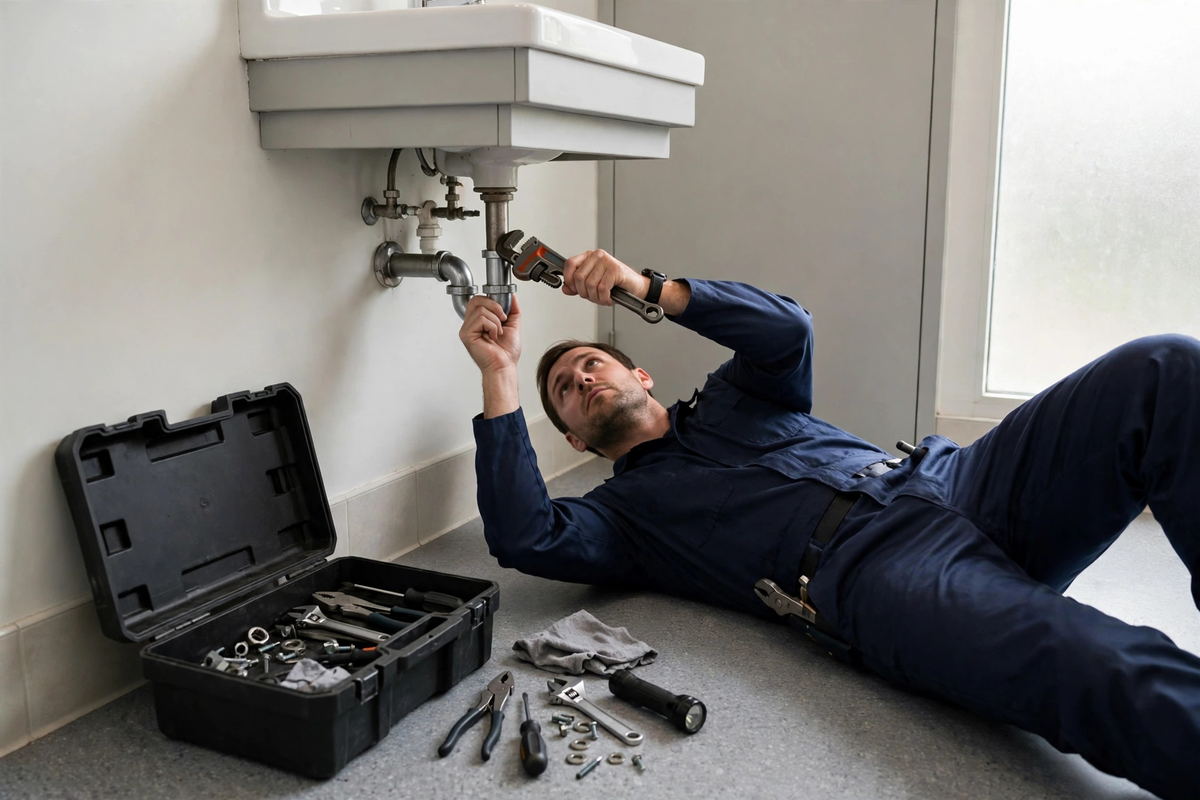
Commercial plumbing in Lakewood, CO covers the buildings where plumbing serves many people at once: office restrooms, retail spaces, restaurants, and tenant improvements. The work is different from residential plumbing — higher fixture counts, shared stacks and risers, grease lines, and schedules built around business hours. This page also covers the two Lakewood districts that are commercial-only: Denver West and the Federal Center are not residential neighborhoods, and no residential claims are made for them here.
Call any hour, any day — the phone is answered around the clock.
We explain what we found and what the options are before work starts.
Equipped vehicles and a clean job site when we leave.
A Lakewood business at 200 Union Blvd — neighbors serving neighbors.
Commercial work is planned around the business, not the other way around. Here is what it covers.
Restroom cores, fixture replacement, and drain work for offices and retail spaces, scheduled to minimize disruption to the business.
Rough-ins and fixture work for tenant build-outs and remodels, coordinated with the rest of the fit-out.
Drain and grease-line work for food service and retail, including hydro jetting for lines that carry heavy grease loads.
Annual testing of testable assemblies on commercial properties, including irrigation and fire-line assemblies, with results filed with the water provider.
Commercial water heater repair and replacement, sized to the building's fixture count and demand.
A burst pipe or sewage backup in a commercial building is an emergency call — open 24 hours, every day, at (720) 909-6690.
Call (720) 909-6690 — open 24 hours, every day — and tell us what is happening.
Commercial plumbing is plumbing at scale: more fixtures, shared systems, and a business that cannot close for the work.
The difference starts with the building. A commercial restroom core serves dozens or hundreds of people a day, and a failure there closes a floor, not a bathroom. Shared stacks and risers mean one blockage affects many tenants, and the drain work has to be planned so the rest of the building keeps working. Restaurants add grease lines that need jetting on a schedule, not when they block. Tenant improvements add rough-ins and fixture work that must be coordinated with electricians, drywall, and the landlord's schedule. Our emergency plumbing services page covers the call when a commercial line fails out of hours, and our drain cleaning and hydro jetting pages cover the drain side of the work.
Lakewood's commercial geography matters here. Academy Park is the commercial-first example: an office park of about 4,000 employees beside a small 1980s-90s residential pocket, where the plumbing story is commercial restrooms, break-room and kitchenette lines, and tenant-improvement rough-ins. Denver West is a commercial and mixed-use district at the Colfax and I-70 interchange — office, retail, and food-service grease lines — and it is not a residential neighborhood. The Federal Center is a federal campus of about 600 acres with office, research, warehouse, and lab space, and its plumbing is institutional: large restroom cores, lab and process water, and backflow prevention on a federal campus. Both districts are covered here as commercial-only notes, and neither appears as a residential location page. Our backflow testing page covers the compliance side that commercial properties carry, and our water heater replacement page covers the heater side of a building's demand.
Tell us the building, the floor, and what is failing — and whether the business can stay open while the work runs.
A camera or a pressure test finds the cause, with the shared stacks and risers mapped so the rest of the building keeps working.
We explain what we found and what the options are, including the schedule — what can be done during business hours and what needs an off-hours window.
The job is done to the 2021 International Plumbing Code adopted by Lakewood, permitted where a permit is required, and tested before we leave.
The work, the test results, and the permit sign-off are recorded for the building's file — and the next maintenance check is noted.
Maps shared stacks and risers before any drain work, so one tenant's blockage does not become a building-wide problem.
Clears grease lines and commercial drains on a schedule, before they block during service.
Calibrated testing for commercial assemblies, including irrigation and fire-line work, with results filed with the provider.
Commercial fixture parts on the truck, so a restroom repair does not wait for a parts order.
Proves every new run holds before walls close, on systems that serve many fixtures at once.
Marks the path and depth of commercial service lines before any exterior work begins.
A shared stack serves several floors, and the blockage affects more than one tenant. The camera finds the cause, the line is jetted, and the work is scheduled so the rest of the building keeps working.
Food-service grease has narrowed the line over months. Hydro jetting clears it, and a jetting schedule is set so the next blockage does not arrive during dinner.
The campus carries testable assemblies on irrigation and fire lines. The annual tests are run by a certified tester and the results are filed with the water provider.
Lakewood's commercial plumbing is concentrated in a few places: the Academy Park office park in the south, the Denver West district at Colfax and I-70 in the north, the Federal Center campus on Union Boulevard, and the Belmar mixed-use district at Wadsworth and Alameda. Each has a different plumbing profile — office restrooms, retail grease lines, institutional lab water — and the work is planned for the building, not the neighborhood.
An office park of about 4,000 employees — commercial restrooms, break-room lines, and tenant-improvement rough-ins beside a small residential pocket.
A commercial and mixed-use district at Colfax and I-70 — office, retail, and food-service grease lines. Not a residential neighborhood.
A federal campus of about 600 acres — large restroom cores, lab and process water, and backflow prevention. Commercial and institutional only.
The Belmar mixed-use district beside the residential neighborhood — condos and live-work units above retail, with shared stacks and HOA plumbing.
Foothill-edge commercial buildings where sloped lots and elevation change shape the drainage.
One blockage affects many tenants — the camera maps the stack before any drain work starts.
Restaurant and retail grease lines need jetting on a schedule, not when they block.
Commercial restroom cores serve dozens or hundreds of people a day — a failure closes a floor.
Work that cannot happen during business hours is scheduled around the business, not through it.
Before: an office restroom core backs up on a workday and several floors lose their restrooms.
After: the camera finds the blockage in the shared stack, the line is jetted, and the work is scheduled so the rest of the building keeps working.
Maintenance: Shared stacks are mapped before drain work starts — one tenant's blockage is never treated as one tenant's problem.
Before: a restaurant's grease line blocks during service, and the kitchen closes for the night.
After: hydro jetting clears the line and a jetting schedule is set, so the next blockage does not arrive during dinner.
Maintenance: Grease lines are maintained on a schedule. The cost of a scheduled jet is the cost of one lost service night avoided.
Before: a federal campus carries testable assemblies on irrigation and fire lines, and the annual tests are due.
After: the tests are run by a certified tester and the results are filed with the water provider — the campus is back in compliance.
Maintenance: The test is annual, and the filing is the record. The next test is due a year from this one.
Commercial problems are residential problems at scale — more fixtures, shared systems, and a business that cannot close. These are the ones we see.
A shared stack serves many tenants, and one blockage affects them all. The camera maps the stack, the line is jetted, and the schedule protects the business.
Food-service grease narrows drains over months. Jetting on a schedule keeps the kitchen open.
Rough-ins and fixture work for a new tenant, coordinated with the rest of the fit-out and the landlord's schedule.
Annual testing on commercial properties, including irrigation and fire-line assemblies, with results filed with the provider.
A commercial heater sized to the building's fixture count and demand — repair or replacement, planned around the business.
Commercial work is scheduled work: the building stays open, the tenants stay working, and the plumbing is fixed around them. The plan matters as much as the pipe.
Emergency Plumber Lakewood holds a 5.0-star rating from 9 Google reviews. Homeowners across Lakewood call us when a main line fails, a water heater quits, or a drain will not clear — and the reviews describe the same things we aim for on every visit: a clear explanation of what is wrong, the options before work starts, and a clean job site when we leave. Call (720) 909-6690 — open 24 hours, every day — to talk through what is happening at your home.
Yes. We handle office and retail restrooms, tenant improvements, grease lines, backflow testing, and water heater work for commercial buildings across Lakewood — including Academy Park, Denver West, and the Federal Center.
No. Denver West is a commercial and mixed-use district at the Colfax and I-70 interchange — office, retail, and food service. We serve it for commercial plumbing only, and it is not a residential neighborhood.
No. The Federal Center is a federal campus of about 600 acres with office, research, warehouse, and lab space. We cover it here as a commercial and institutional note only — it has no residential housing stock.
Yes. Work that cannot happen during business hours is scheduled in off-hours windows, and drain work on shared stacks is planned so the rest of the building keeps working.
Not seeing your question? Call (720) 909-6690 — open 24 hours, every day — and talk it through with the local team.
Ask the local teamReach us any hour at (720) 909-6690. Tell us the building, the floor, and what is failing — and whether the business can stay open while the work runs.