Clear arrival updates
Useful updates and clear timing once a visit is booked.
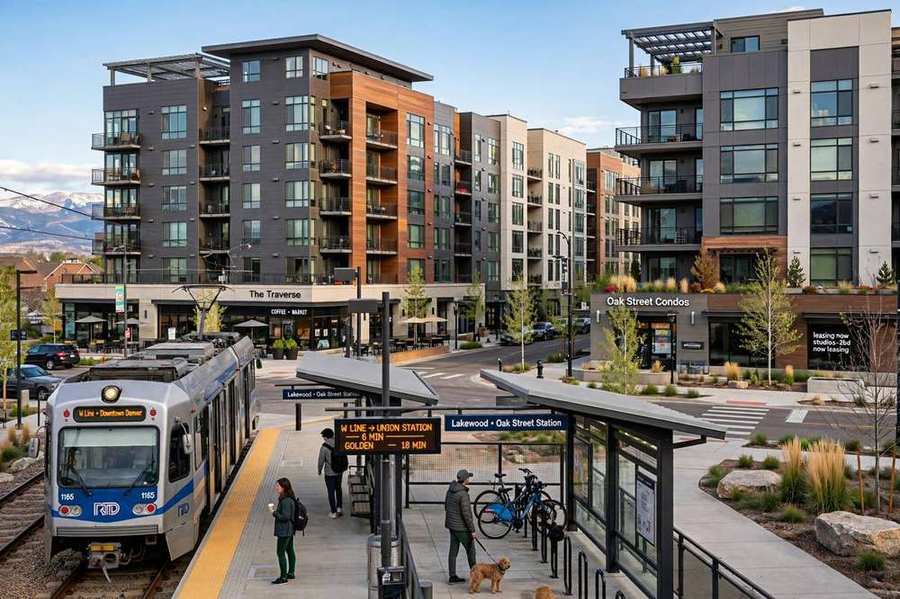
Union Square is Lakewood's condo and HOA neighborhood at a transit station, and that changes the plumbing completely. The housing is predominantly attached condos, townhomes and apartment communities from the 1980s and 1990s, not detached single-family homes, so the work is shared drain stacks, common water-service sizing, HOA and common-element plumbing, and water-heater replacement at scale in 1980s buildings. The Federal Center Station on the W Line sits beside it, and our office is on Union Boulevard in Union Square. We are open 24 hours, every day, at (720) 909-6690.
Useful updates and clear timing once a visit is booked.
Review the approach before deciding, with the work explained in plain terms.
Equipped vehicles and respectful cleanup.
Neighbors serving neighbors with follow-through.
Union Square sits in west Lakewood, around West 2nd Place, Wright Street and Union Boulevard, between the Denver Federal Center campus and Green Mountain, adjacent to the RTD Federal Center Station on the W Line and Red Rocks Community College. Higher-density housing developed here in the 1980s and 1990s, and the resale stock is dominated by condos built from 1979 to 1984, including Wright Street and Zang Street condos from 1980 to 1984 and the Silver Reef apartments, built in 1984 and 1985 with 419 units, alongside Riva Ridge from 1984 and Viewpoint townhomes from 1984. The median year built is reported as 1990 in one measure and 1984 in another, so we use the era range, the 1980s and 1990s, rather than a single settled figure. Homes of the 1980s core typically have copper supply lines and PVC or ABS drains, with polybutylene risk squarely in frame, since the 1978 to 1995 window covers most of the original construction, and newer buildings from the 1990s to the 2020s are past the polybutylene window with PEX or copper and PVC. Most attached buildings are slab-on-grade or podium construction, individual condos rarely have basements, and the below-grade plumbing lives in common-area mechanical rooms and below-grade parking levels.
Union Square is Lakewood's condo and HOA neighborhood at the Federal Center Station, and the work here is shared-system plumbing, not single-family repipes. The 1980s-90s attached buildings run on shared drain stacks, common water service and HOA common elements, with polybutylene in the 1980s core and newer PEX and copper in the later buildings.
In a condo a leak can sit in a shared wall and show up in the unit below, and a supply joint can travel through floors before it appears. We find the source with listening gear, pressure tests and a camera, instead of opening the wrong unit.
View service →02In a shared stack the camera matters most, because the blockage is rarely in the unit that called first and the stack serves every unit above it. The camera pass finds roots, breaks, bellies and bad joints, so the building's fix fits the fault.
View service →03A tank heater in a 1980s building is often one of several reaching the end of its life in the same season, and the venting and sizing have to fit the building. The replacement is fitted to code, with a permit where Lakewood requires one, and the old tank removed.
View service →04The irrigation and common-area systems around the condo buildings need assemblies that get tested every year. Backflow assemblies get tested, the result filed with the water provider, and any failed assembly repaired or replaced.
View service →05In a condo building, slow drains usually mean the shared stack or the common line rather than one unit. A snake clears the blockage, and hydro jetting scours the pipe wall where a snake would only poke a hole through the clog, then a camera pass confirms the line is genuinely clear.
View service →06A burst pipe in a shared wall, a sewer backup across several units, or a heater failure will not wait for business hours. The (720) 909-6690 line is answered day or night.
View service →07We install faucets, toilets, showers, tubs and sinks, test them for leaks, and check the shutoffs so the next repair does not need a whole-building shutoff. In a condo the shutoff question is an HOA question as well as a unit question, so we confirm who owns the line before the work starts.
View service →08The 1980s core falls in the 1978-1995 polybutylene window, so the check is for grey PB2110 pipe at water-heater connections and under-sink shutoffs. Where polybutylene is found across a building, a repipe replaces the failing supply runs with modern pipe, unit by unit, and one finding implicates dozens of units.
View service →09A drain or sewer line sheds its grease, scale and roots under high-pressure water. Jetting ends with a camera pass to prove the line is genuinely clean. In a shared stack the proof matters, because a clear unit can hide a blockage below.
View service →The building decides the job here, not the unit, because Union Square is the only neighborhood in this batch where the housing is predominantly attached condos and apartments. A finding in one unit implicates the whole building, a shared stack serves every unit above it, and the HOA owns the common elements, so the first step on any visit is to establish whether the problem is a unit problem or a building problem. Lakewood's code for the work is the 2021 International Plumbing Code, adopted in Municipal Code Chapter 14.05, with the Colorado Plumbing Code underneath it. Permits in Lakewood cover a water heater replacement, service lines, fixture installs, gas piping, drain and sewer work, sewer replacement, and repiping. Fees follow valuation under Resolution R-2025-69, in effect since 1 January 2026, so the figure depends on the job. Ring the Lakewood Permit Counter on 303-987-7500 to confirm a fee. In a condo building we confirm who owns the line, unit or HOA, before any work is planned.
The 1980s core falls in the 1978-1995 polybutylene window, so the check is for grey PB2110 pipe at water-heater connections and under-sink shutoffs. One PB finding implicates dozens of units, so the identification runs across the whole building rather than stopping at the unit that called first.
When more than one condo backs up together, the problem sits in the shared stack or the common line, not in a single unit. That is a building problem, and it gets worse as more fixtures are used, so the fix starts at the stack and the common water service rather than at the unit that called first.
A tank heater in a 1980s building is often one of several reaching the end of its life in the same season. Replacing them at scale means sizing each unit to its condo, confirming the venting, and scheduling the work so the building stays in water while the units turn over.
Chapter 14.05 of the Lakewood Municipal Code adopts the 2021 IPC through Ordinance O-2023-16. The attached condo and apartment buildings here fall under Chapters 25-33 of the 2021 IRC for residential work.
By the value of the job, the valuation schedule in Resolution R-2025-69, effective 1 January 2026, sets the permit fee. The Lakewood Permit Counter, on 303-987-7500, confirms the figure ahead of permitted work.
Union Square is the only neighborhood in this batch where the housing is predominantly attached condos and apartments, so the work is HOA and common-element plumbing, not single-family repipes. A finding in one unit implicates the whole building, and the problems below all run through the shared systems.
The 1980s condos fall in the 1978-1995 polybutylene window, so the check is for grey PB2110 pipe at water-heater connections and under-sink shutoffs. A finding in one unit implicates dozens of units, and the plan has to cover the building rather than the unit.
When more than one condo backs up together, the problem sits in the shared stack or the common line, not in a single unit. That is a building problem, and it worsens with every fixture in use, so the fix starts at the stack.
A supply or drain joint that fails in one condo can show up as a damp patch on the ceiling of the unit below, because the leak travels through shared walls and floors. The stain is rarely directly under the failure, so the trace starts above the stain rather than at it.
A tank heater in a 1980s building is often one of several reaching the end of its life in the same season. A tank that recovers slowly usually has a failing element or a heavy sediment layer, and in a building this age several units can reach that point together.
Union Square is navigated by its station and its corridor. Federal Center Station is the transit landmark, Union Boulevard is the corridor, and Red Rocks Community College and St. Anthony Hospital are the institutional neighbors. Our office is on Union Boulevard in Union Square.
The RTD Federal Center Station on the W Line sits beside the neighborhood and is the transit landmark for the whole area.
Union Boulevard is the corridor through the neighborhood, and our office is on Union Boulevard in Union Square.
The Denver Federal Center campus sits beside the neighborhood to the east, and its institutional water use is part of the area's infrastructure.
Red Rocks Community College sits beside the neighborhood and is one of the institutional neighbors for the area.
St. Anthony Hospital sits beside the neighborhood and is the other institutional neighbor for the area.
We serve Union Square across its condo and apartment communities, from the 1980s resale stock on Wright and Zang Streets to the larger apartment communities and the newer mixed-use buildings along the Union corridor. The areas below are the parts of the neighborhood and the nearby west-side neighborhoods we work in most.
Green Mountain is the next neighborhood east, with terraced hillside homes and walk-out basements at the city's highest service elevations.
Rooney Valley is Lakewood's newest neighborhood at the foothills edge, with brand-new PEX and copper homes where the work is freeze protection, irrigation and backflow, not repipes.
Foothills is the west-side neighborhood where 1960s-70s smaller-lot homes meet rising ground toward Green Mountain Park, and sloped-lot drainage is the distinct issue there.
Grant Ranch is the planned community to the south, and its page leads with jurisdiction and HOA checks because much of marketed Grant Ranch sits outside Lakewood city limits.
The jobs below are the patterns that come up most often in the condo buildings at the Federal Center Station, described as typical calls rather than one specific visit. The building is the pattern in all three, not the unit.
Polybutylene found in one condo implicates the whole building, because the 1980s core falls in the 1978-1995 window. The usual answer is to check the water-heater connections and under-sink shutoffs across the building, then plan the repipe unit by unit from what was found.
When more than one condo backs up together, the problem sits in the shared stack or the common line. The usual answer is to camera the stack, clear the blockage, and check the common line before any unit work is planned.
A water heater in a 1980s building is often one of several reaching the end of its life in the same season. The usual answer is to replace the units in turn, sizing each to its condo and confirming the venting, so the building stays in water while the units turn over.
Very impressed did a great job
Amazing job very impressed
Arrived in less than an hour and completed the job in less than two hours for a very good price.
The year here is a building year. Spring wakes the irrigation and common areas, summer opens the window for the at-scale work, the fall freeze finds the common-area lines, and winter is when the 1980s water heaters give up together.
In spring, snowmelt and root growth arrive together, and the common-area irrigation wakes up for the season. A backflow test in spring catches an assembly that sat idle all winter before the irrigation runs at full volume.
With the ground workable and the building schedule open, summer is the window for the at-scale work, when water-heater replacements and repipe phases can be scheduled building by building. A tank flush and a descale fit here too, after a winter of hard use.
Between late October and mid-November the first hard freeze usually arrives, and the common-area lines and outdoor faucets feel it first. Protect first the outdoor line that froze last winter.
Winter is the peak season for frozen pipes and water heater failures. February 2021 is the local reminder of the cold: a high of 1F and a low of -14F on 14 February. In a 1980s building several water heaters can reach the end of their life in the same season.
Union Square sits in west Lakewood, and the neighborhoods below are the ones around it. If you are in one of them, the same west-side and shared-system issues usually apply.
A condo building at a transit station asks questions a single-family house never does. Five are worth asking, and the answers should name the building and the HOA.
The work should be described in plain words, starting with whether the problem is a unit problem or a building problem. A shared-stack plan looks nothing like a single-unit plan.
In a condo building the camera is the proof that counts, because one stack serves every unit above it. Ask to see the findings: camera footage, a pressure reading, or the failed part itself.
A repipe phase or a water-heater replacement at scale is where the permit question comes up first. Gas piping, a service line, sewer work and a water heater replacement usually need a permit in Lakewood. Ask who takes it on and what it covers.
Before the visit, clear access to the fixture, the heater and the cleanout. In a condo building it helps to know whether the mechanical room or the unit is the access point, and the shutoff should be found before we arrive. Let the HOA know we are coming.
For anything after the visit, the HOA or the unit owner can reach the same team at (720) 909-6690.
In the condo buildings, the code is the 2021 International Plumbing Code, adopted by Lakewood in Chapter 14.05 under Ordinance O-2023-16, with the Colorado Plumbing Code below it. In the condo buildings the code covers the shared-stack, repipe and water-heater work that comes up most often.
For the big jobs, a permit is needed, and in Union Square that usually means a water heater replacement, a service line, gas piping, or sewer and repipe work across a whole building. Before the work is agreed, which jobs need one gets confirmed.
Under Resolution R-2025-69, which took effect 1 January 2026, Lakewood's permit fees follow valuation. No flat figure applies. For a given job, call the Lakewood Permit Counter at 303-987-7500 to confirm the fee.
Attached condo and apartment buildings here, most of them built in the 1980s and 1990s, fall under Chapters 25-33 of the 2021 International Residential Code for their residential plumbing work.
A certified tester tests the testable backflow assemblies every year, and the results go to the water provider. Irrigation and common-area systems are the most common trigger here, and Green Mountain Water and Sanitation District serves the west side, including this neighborhood.
Pre-1951 homes are covered by Denver Water's Lead Reduction Program, and no Lakewood-only lead-line count exists. Screening runs address by address. The 1980s-90s buildings here postdate 1951 by decades, so lead service lines are not part of the picture in Union Square, and the check still runs by address.
Smell gas? Leave the property first and call 911 or Xcel Energy, then call a plumber after. Do not stay inside to look into a suspected leak.
It is Lakewood's condo and HOA neighborhood at a transit station. The housing is predominantly attached condos, townhomes and apartment communities from the 1980s and 1990s, so the work is shared drain stacks, common water-service sizing, HOA and common-element plumbing, and water-heater replacement at scale, not single-family repipes.
Check for grey PB2110 pipe, especially at water-heater connections and under-sink shutoffs. The 1978 to 1995 polybutylene window covers most of the original construction in Union Square, and one finding can implicate dozens of units, so the check is worth doing building-wide.
The HOA owns the common elements, and the unit owns what is inside it, but the boundary has to be settled for each building before the work starts. A leak in a shared wall or a stack blockage is usually a common-element question, and the HOA should be involved from the start.
Union Square sits beside the RTD Federal Center Station on the W Line, and the Federal Center Station and the Union corridor are the city's designated growth core for mixed-use development. The Bend, with 2,000 homes planned, is bringing new commercial plumbing alongside the old stock.
Yes. We are open 24 hours, every day, and the phone number is (720) 909-6690. A burst pipe, a sewer backup or a shared stack backing up across units is an emergency call at any hour. Our office is on Union Boulevard in Union Square.
Not seeing your question? Our local team can help you understand urgency, scheduling and what to expect.
Ask the local teamCall (720) 909-6690 any hour. We are open 24 hours, every day, for Union Square's condos, townhomes and apartment buildings alike.