Open 24 hours
Call any hour, any day — the phone is answered around the clock.
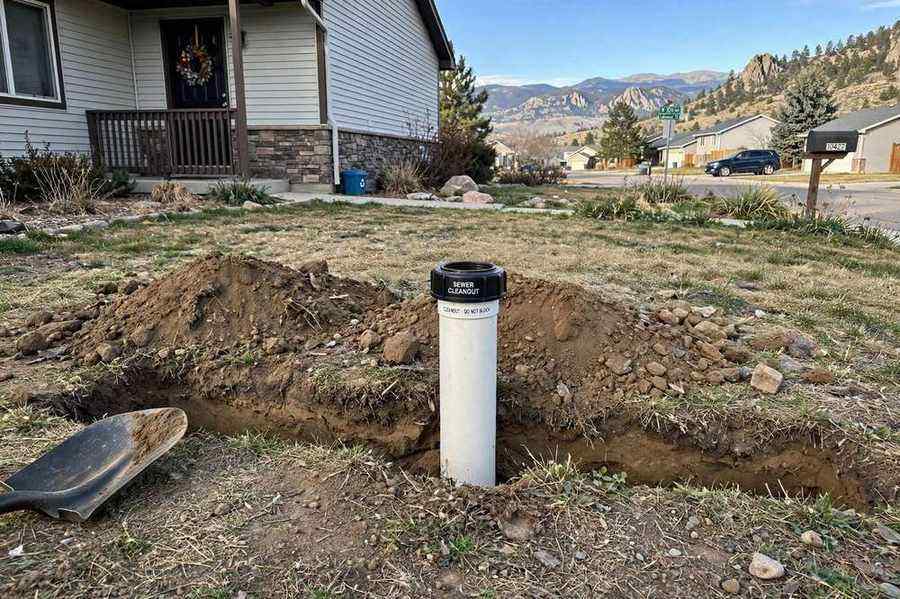
Sewer line replacement in Lakewood, CO means putting a new main drain line in place of one that can no longer carry waste away from your home. When the camera shows a collapsed clay lateral, a bellied run that holds water, or Orangeburg pipe that has flattened out of shape, cleaning buys weeks — replacement fixes the cause. We diagnose with a sewer camera first, then talk through open-cut and trenchless options before any digging starts.
Call any hour, any day — the phone is answered around the clock.
We explain what we found and what the options are before work starts.
Equipped vehicles and a clean job site when we leave.
A Lakewood business at 200 Union Blvd — neighbors serving neighbors.
A replacement is a full job, not a patch: a new line from the house to the district main, installed to the correct fall, tested, and inspected. Here is what the work covers.
A full camera run from the cleanout to the main, recorded so you can see the cracks, root intrusion, bellies, and collapsed sections before you approve any work.
New pipe sized to the fixture load in your home, with new fittings and cleanouts where the existing ones are damaged or missing.
Sewer replacement needs a City of Lakewood plumbing permit, and work under a sidewalk or street needs a right-of-way permit too. Confirm both with the Lakewood Permit Counter at 303-987-7500.
Open-cut trenching or small access pits for a trenchless pull, with spoil hauled away and backfill compacted in lifts.
The new line is tested and camera-checked a second time to confirm fall and joint alignment before the trench is closed.
You keep the camera footage and the permit sign-off, which matters when you sell the house and the buyer's inspector runs a scope.
Call (720) 909-6690 — open 24 hours, every day — and tell us what is happening.
Replacement means a new sewer lateral — the pipe that carries waste from your home to the district main — installed in place of the failed run.
In most Lakewood districts the homeowner owns the lateral to the main, so when it fails, the fix is the homeowner's to arrange. Homes built in the 1940s, 50s, and 60s around Eiber, Applewood, and Morse Park typically still have their original clay tile or Orangeburg laterals, and at 70 to 80 years old those materials are at the end of their service life. Expansive bentonite clay under Lakewood shifts with every freeze-thaw cycle, opening joints, cracking clay tile, and letting bellies form where waste sits instead of flowing. Mature trees make it worse: roots find hairline cracks and grow into the pipe until flow stops. If your drains back up more than once in a year, or a sewer camera inspection shows damage at several points along the run, replacement is the honest answer.
There are two ways to put the new line in. Open-cut replacement excavates the full run and lays new pipe at the correct fall — the right choice when the old line is collapsed, deeply bellied, or the connection at the main needs rebuilding. Trenchless replacement pulls a new jointless pipe through the old line from two small pits, which protects driveways, patios, and mature landscaping. Our trenchless sewer repair page explains when that method fits and when it does not. Either way, the work is permitted through the City of Lakewood and inspected at final, and the permit fee is valuation-based, so confirm it with the Permit Counter at 303-987-7500 rather than relying on any flat figure you see online.
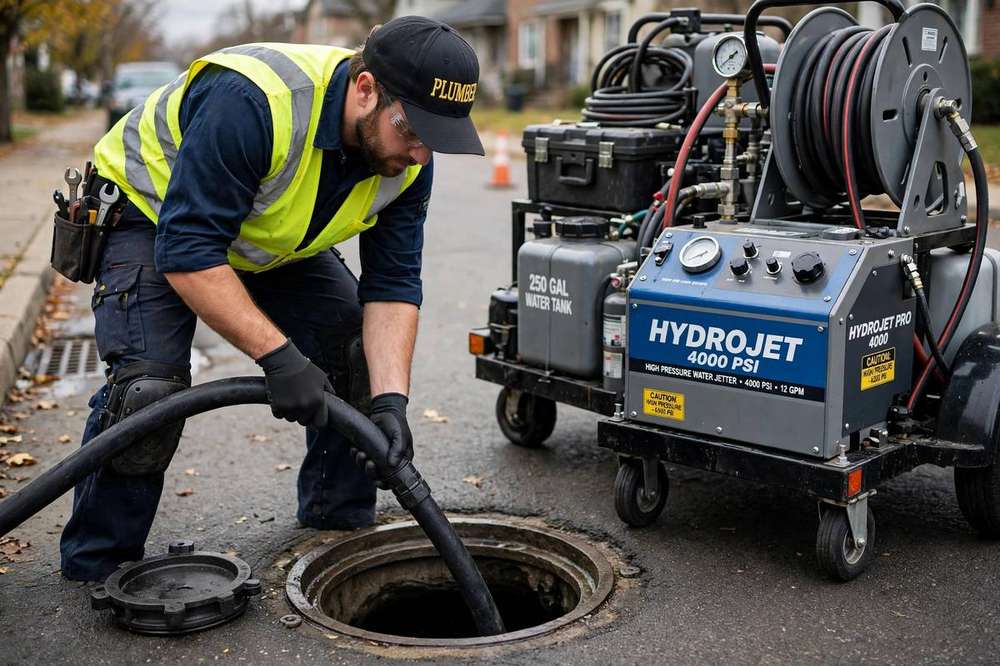
We run a sewer camera from the cleanout to the main and record the footage. You see the defects on screen with us, and we mark depth, material, and every crack, offset joint, and belly so the scope is based on evidence.
We explain whether the line needs a full replacement or whether a sewer line repair of one section would hold, and whether open-cut or trenchless fits your line and your lot.
The plumbing permit is arranged and utility locates are called in before any digging. Gas, water, electric, and fiber get marked so excavation stays safe.
On install day we remove the failed pipe and set the new line at the correct fall, tying into the district main. Trenchless pulls work from two small pits; open-cut opens the full run.
We test the new line and run the camera a second time to confirm fall and joint alignment. After the city inspector signs off, we backfill in compacted lifts and restore the surface.
Records the full run from cleanout to main so we can locate cracks, root intrusion, and bellies, and so you can see the evidence before approving work.
Marks the exact depth and path of the existing line and the new one, which keeps excavation tight and protects buried utilities.
Clears roots, grease, and scale at high pressure when the line is worth cleaning, and cleans the run before a trenchless pull.
Handles smaller blockages and confirms flow after a repair, so we can clear a line on the same visit we inspect it.
Cut out failed sections cleanly and handle supply-line work when a repipe happens alongside the sewer job.
Pulls new jointless pipe through the existing clay tile, cast iron, or Orangeburg host pipe from two small access pits.
The typical pattern here is root intrusion at several joints plus a belly under the lawn. The camera shows the full picture, and a trenchless pull from two small pits usually fits — the lawn and driveway stay intact while the whole run becomes one jointless line.
A shared main line that is undersized or partially collapsed backs up under combined load. Replacement with correctly sized pipe and rebuilt cleanouts lets both homes drain at once, and the permit sign-off goes on file for the property.
A cracked section can leak into the soil and the odor is the first sign. The camera locates the break, the failed run is replaced, and the main connection is checked too — because a failing connection causes the same symptoms.
A replacement is a full job, not a patch: a new lateral from the house to the district main, installed at the correct fall, tested, camera-checked, and inspected. The decision between open-cut and trenchless is made from the camera footage — a collapsed line, a long belly, or a connection at the main that needs rebuilding takes open-cut, while a sound host pipe takes a trenchless pull from two small pits. Permits are arranged before digging, utility locates are called in, and the trench is backfilled in compacted lifts only after the inspector signs off. The neighborhoods below are where full-run replacement is most common.
Lakewood's oldest surviving housing core, with 335 buildings from 1900–1940. Laterals here predate the city, and a full run is often the only honest answer.
Duplex and small multi-family properties where a shared main line is undersized for two households — the lower unit floods when both homes do laundry, and the permit sign-off goes on file for the property.
Hillside homes at the city’s highest service elevations, where long runs under mature trees make a trenchless pull worth more than the concrete and landscaping it saves.
1970s split-levels with lower-level bathrooms and laundry below grade, plus a western fringe of horse lots with long laterals and barn lines.
The full run is excavated and new pipe is laid at the correct fall. The right choice when the old line is collapsed, deeply bellied, or the tap needs rebuilding.
A new jointless pipe is pulled through the old line from two small pits. Driveways, patios, and mature landscaping stay intact.
The connection at the district main is rebuilt where it has failed. A new lateral on a failed tap backs up the same way the old one did.
Work under a sidewalk or street needs a right-of-way permit as well as a plumbing permit. Both are confirmed with the Permit Counter.
Backfill is compacted in lifts and the surface is restored only after the city inspector signs off and the camera passes at final.
Before: a 1950s ranch has clay tile with root intrusion at four joints and a belly under the front lawn, and the line needs clearing every few months.
After: a new jointless line is pulled trenchlessly in place of the old run, the camera passes at final, and the lawn is untouched.
Maintenance: A camera check every couple of years confirms the new line is still at grade. Keep large trees trimmed back from the line.
Before: a duplex shares an undersized main line that backs up whenever both homes do laundry, and the lower unit has flooded.
After: the full run is replaced with correctly sized pipe, both cleanouts are rebuilt, and the grade is corrected so both homes drain at once.
Maintenance: Stagger heavy laundry loads where you can, and have the line camera-checked if drains slow again.
Before: a 1950s home has Orangeburg pipe that has flattened into an oval, and concrete sits directly over the run.
After: new pipe is pulled through the old host pipe from two small pits, leaving the driveway and walkway intact, and the line passes camera inspection at final.
Maintenance: Keep the two access points marked on your property sketch for future work.
Most main-line failures show warning signs months before sewage reaches the floor. Here are the problems we see most in Lakewood, and how replacement answers them.
Roots enter through hairline cracks, then swell and block flow. You get slow drains, gurgling, and eventually a full backup into the lowest floor. A new jointless line removes the entry points.
Old clay tile shifts in Lakewood's expansive soils, creating low spots that hold water and debris. Clearing buys weeks; replacement corrects the grade so waste flows downhill the whole way.
Orangeburg was tar-paper pipe used in the 1950s and 60s. It deforms over decades and eventually flattens into an oval. There is no repairing it — the full run is replaced.
If you are paying to clear the same line every few months, the underlying defect never goes away. The camera shows why it keeps blocking, and replacement ends the cycle.
A cracked main line leaks into the yard. You smell it near the cleanout, and saturated soil can undermine a driveway over time. We locate the break, replace the run, and check the main connection.
Sewer replacement is the heaviest residential job we do, and the difference between a line that lasts and one that settles is in the details: the camera work before, the fall during, and the testing after.
Emergency Plumber Lakewood holds a 5.0-star rating from 9 Google reviews. Homeowners across Lakewood call us when a main line fails, a water heater quits, or a drain will not clear — and the reviews describe the same things we aim for on every visit: a clear explanation of what is wrong, the options before work starts, and a clean job site when we leave. Call (720) 909-6690 — open 24 hours, every day — to talk through what is happening at your home.
Replace when the camera shows cracked clay tile, offset joints, root intrusion at several points, or a belly that holds water. A single bad section can often be repaired — see our sewer line repair page — but damage along the whole run means the line has reached the end of its service life.
Yes, where the old line can host it. We pull new jointless pipe through the existing clay tile, cast iron, or Orangeburg host pipe from two small access pits. Trenchless does not fit a collapsed line, a long belly, or a connection at the main that needs rebuilding — those need open-cut work.
Yes. Sewer replacement needs a City of Lakewood plumbing permit, and work under a sidewalk or street needs a right-of-way permit as well. Permit fees are valuation-based, so confirm the fee with the Lakewood Permit Counter at 303-987-7500.
In most Lakewood districts the homeowner owns the lateral from the house to the district main, so replacement of that run is the homeowner's responsibility. Confirm the boundary for your address with your water and sanitation district.
Not seeing your question? Call (720) 909-6690 — open 24 hours, every day — and talk it through with the local team.
Ask the local teamReach us any hour at (720) 909-6690. Tell us what the drains are doing, or what the camera already showed, and we will talk through the next step.