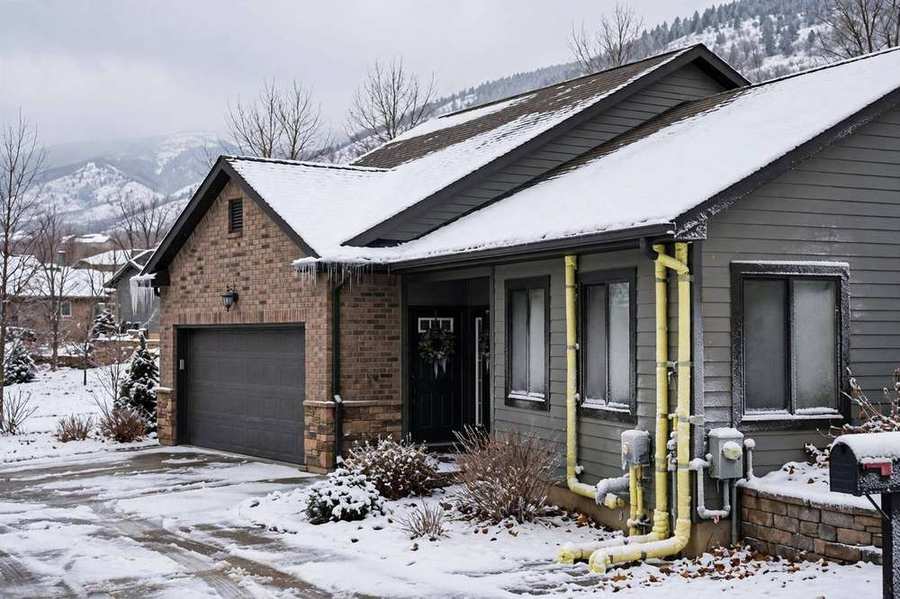
How to thaw frozen pipes safely during a Lakewood cold snap
Lakewood's first freeze usually arrives in late October to mid-November, and a hard cold snap can freeze exposed pipes fast. Here is how to thaw a frozen pipe safely, what never to use, and when to call a plumber.
Lakewood's freeze season is long. The first freeze typically arrives in late October to mid-November, and freezing nights can continue into early May. Most winters pass without a burst pipe, but a multi-day cold snap changes the odds quickly. The February 2021 Arctic outbreak is the recent example: on 14 February the Denver area recorded a high of 1 degree and a low of minus 14, both records for the date, and the following day fell to minus 16. Pipes that had survived ordinary winter nights froze in that stretch, and the lesson from that week still applies. A frozen pipe is a warning. A burst pipe is the damage that follows if the freeze is not dealt with.
How to tell a pipe is frozen
If you see water on a floor or ceiling, or hear water running inside a wall when nothing is turned on, the pipe may already have burst. In that case, shut off the main water supply and call a plumber immediately. If water has already spread through a room, our leak detection page explains how a plumber traces water you cannot see back to its source.
What to do first
Open the faucet served by the frozen pipe, just a little. As the ice thaws, water needs somewhere to go, and an open faucet gives the melting ice and the pressure behind it a path out. Then find the main shut-off and make sure you know how to turn it off quickly. If the pipe bursts while you are thawing it, shutting off the water fast is what limits the damage. Keep towels and a bucket nearby, and keep an eye on the pipe while you work. Never leave a thawing pipe unattended.
Work out where the freeze is. The most likely spots are pipes in unheated spaces: garages, crawlspaces, attics, and exterior walls, plus hose bibbs and the pipes that feed them. In Lakewood, the west-metro freeze-thaw pattern means pipes can freeze and thaw repeatedly through the winter, which is hard on joints and fittings. If you can see the frozen section, you can thaw it. If the frozen section is inside a wall or under a slab, call a plumber. Opening a wall to find a frozen pipe is not a homeowner job.
How to thaw a frozen pipe safely
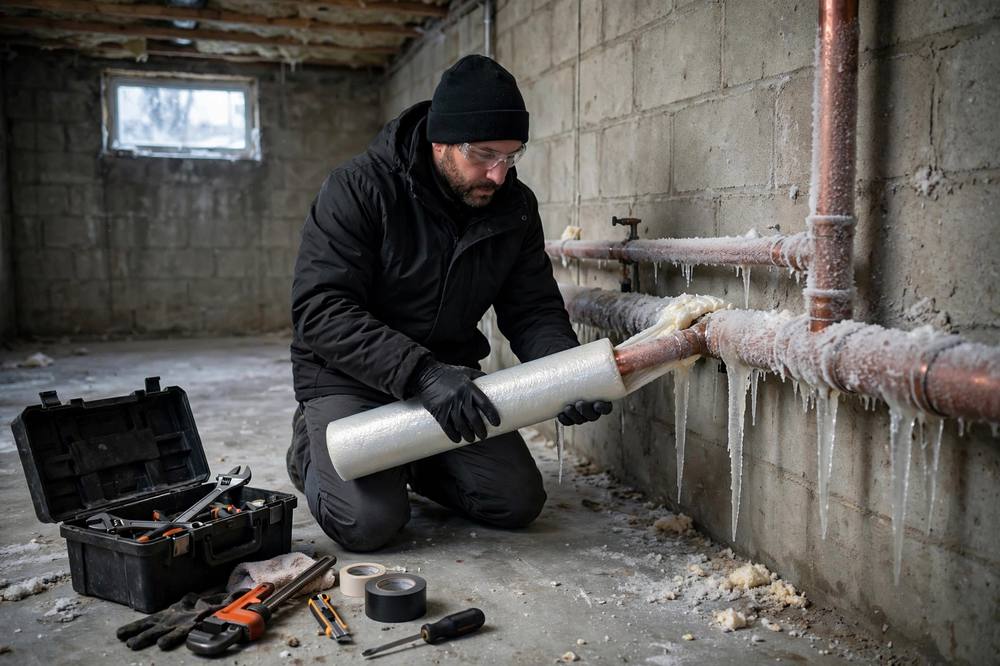
Use warm air. A hair dryer on a low or medium setting, aimed at the frozen section and moved slowly back and forth, is the safest method. Start at the faucet end and work back toward the frozen section, so melting water can escape through the open tap. An electric heating pad wrapped around the pipe, or towels soaked in hot water and wrapped around the pipe, also work. A space heater in the room, kept well away from anything flammable and never left unattended, can raise the air temperature enough for a pipe in a garage or crawlspace to thaw. Patience is part of the method. A frozen pipe can take thirty minutes or more to thaw, and rushing it is how pipes burst.
While you thaw, watch for leaks. As ice melts, a crack that was sealed by the ice itself can start to leak. If you see water spraying or dripping from a split, shut off the main water supply and call a plumber. Do not try to patch a burst pipe with tape or sealant and call it fixed. A burst pipe needs a proper repair, and the section around the burst is often weakened as well. Our frozen and burst pipe repair page explains what that repair involves.
What never to use
Never use an open flame on a frozen pipe. A blowtorch, a propane torch, a kerosene heater, or a candle can start a fire inside a wall, damage the pipe, or ignite insulation and framing that you cannot see. Never use a torch on any pipe, even a metal one, and never use a torch near a gas line. Do not pour boiling water directly on a frozen pipe either, especially a plastic one, because the sudden temperature change can crack it. Do not use an electric heat gun on a high setting for the same reason. Warm air and warm towels are the safe tools, and if they are not working, the freeze is beyond what a homeowner should be tackling.
If you smell gas at any time, leave the property and call 911 and Xcel Energy first, then call a plumber. Do not use electrical equipment, including a hair dryer, if you suspect a gas leak.
Preventing the next freeze
Once the pipe has thawed and you know it is intact, take the freeze as a warning and fix the exposure before the next cold night. Insulate exposed pipes in garages, crawlspaces, and attics with pipe insulation, and seal the gaps and cracks that let cold air reach the pipes. Disconnect garden hoses from outdoor faucets before the first freeze, and shut off and drain the outdoor water lines if your house has a separate shut-off for them. In a cold snap, letting a faucet drip slightly and opening the cabinet doors under a sink on an exterior wall can keep water moving and let warm air reach the pipes. Those are stopgap measures, not a substitute for insulation, but they help on the coldest nights.
Longer term, a plumber can advise on rerouting a pipe that keeps freezing, adding insulation to a crawlspace or garage, or installing frost-proof hose bibbs. Homes on Green Mountain and other higher, wind-exposed parts of Lakewood are more vulnerable than homes on the flats, and a pipe that has frozen once is likely to freeze again in the next cold snap. If your home has frozen pipes more than once, it is worth a professional look at the layout rather than another winter of drip-and-hope.
When to call a plumber
Call a plumber when you cannot find the frozen section, when the pipe is inside a wall or under a slab, when the pipe has burst or is leaking, when no water comes out anywhere in the house, or when a pipe has frozen more than once. Call immediately, and shut off the main water supply first, if you see water damage, hear water running inside a wall, or find a burst pipe. Our emergency plumbing service is open 24 hours, every day, and frozen and burst pipes are the calls we take through every Lakewood cold snap. Call Emergency Plumber Lakewood at (720) 909-6690.
Get help with plumbing in Lakewood
If you would rather have a plumber take it from here, call Emergency Plumber Lakewood at (720) 909-6690. We serve homes across Lakewood, and we are open 24 hours, every day.
Questions before you call
How do I thaw a frozen pipe safely in Lakewood?
Open the faucet served by the frozen pipe, then apply warm air with a hair dryer on a low or medium setting, moving it slowly along the pipe from the faucet end back toward the freeze. Warm towels or a heating pad also work. Never use an open flame or a torch.
How cold does it have to get for pipes to freeze in Lakewood?
Pipes in unheated spaces can freeze on any hard-freeze night. Lakewood's first freeze typically arrives in late October to mid-November, and the February 2021 cold snap reached minus 14 degrees on 14 February. Exposed pipes, hose bibbs, and pipes in garages and crawlspaces are the most vulnerable.
What should I do if a frozen pipe has burst?
Shut off the main water supply immediately and call a plumber. Do not try to patch a burst pipe with tape or sealant. Keep towels and a bucket nearby, and do not use electrical equipment near standing water.
Can I prevent my pipes from freezing?
Insulate exposed pipes, seal gaps that let cold air in, disconnect garden hoses before the first freeze, and drain outdoor water lines. On the coldest nights, letting a faucet drip slightly and opening cabinet doors under sinks on exterior walls helps. A pipe that has frozen once is likely to freeze again, so a professional look at the layout is worth it.
When should I call a plumber for a frozen pipe?
Call when you cannot find the frozen section, when the pipe is inside a wall or under a slab, when the pipe has burst or is leaking, when no water comes out anywhere in the house, or when a pipe has frozen more than once.
Sources
- National Weather Service Boulder — February 2021 Climate Summary for the Denver Area — record temperatures for 14–15 February 2021 cited in this guide.