Stop the water first
The first job is the main shutoff. We walk you to it over the phone, so the damage stops before a truck rolls.
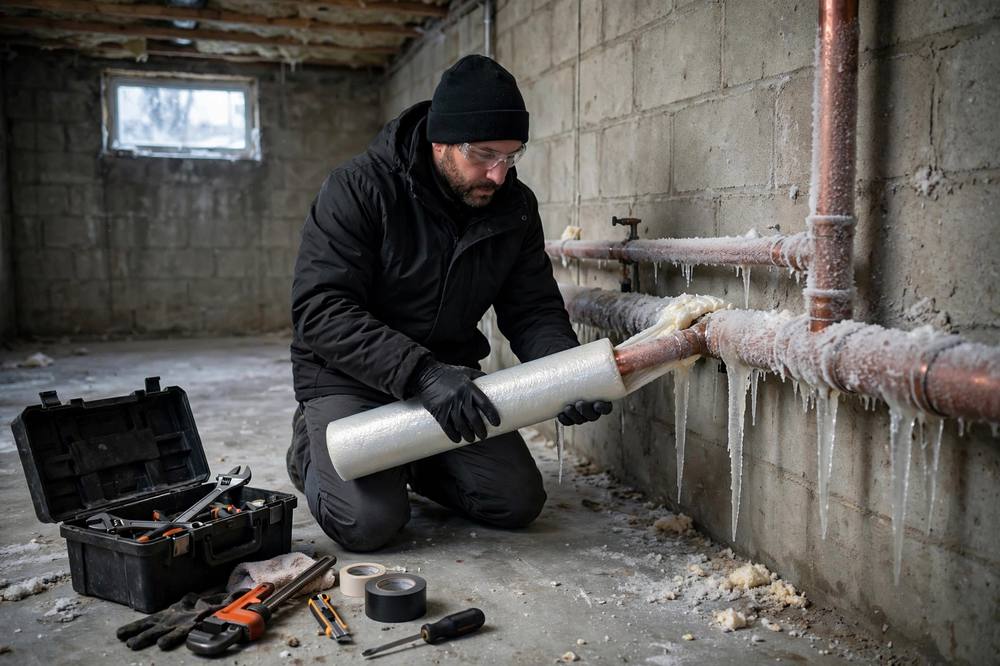
frozen pipe repair Lakewood CO — Lakewood’s first hard freeze arrives in late October to mid-November, and the pipes that fail are the ones nobody insulated: the garage run, the crawlspace line, the hose bib. Frozen pipe repair and burst pipe repair in Lakewood, CO, is one job at two stages — thaw it, then fix the split. Call (720) 909-6690. We are open 24 hours, every day, from 200 Union Blvd in Lakewood.
The first job is the main shutoff. We walk you to it over the phone, so the damage stops before a truck rolls.
A frozen pipe is thawed carefully and checked along its whole run — a pipe that froze once usually split somewhere, and the split is not always where the ice was.
You hear what split, what the repair involves, and what to insulate before the next cold night — before any work starts.
We work in Lakewood’s neighborhoods every day, from Applewood to Green Mountain, and we stand behind the work we leave behind.
Frozen and burst pipe repair covers the thaw, the repair, and the insulation that keeps the same pipe from splitting again.
The split section is cut out and replaced with matching material — copper or PEX — and the line is pressure-tested before we leave.
A frozen line is thawed along its run and checked for splits. A pipe that froze once usually split somewhere, and we find it before the water comes back on.
A gate valve that will not close turns a small leak into a flood. We replace failed shutoffs so the next repair starts with control.
Hose bibs and exterior runs are the first to freeze in Lakewood. We repair the split and fit the shutoff and insulation that protect it.
Exposed runs in garages, crawlspaces, and exterior walls get insulated, and we check the other exposed runs for the same freeze risk.
A burst pipe will not wait for morning. Call any hour and talk to the Lakewood team — we will walk you to the shutoff first.
Frozen pipe repair Lakewood CO and burst pipe repair Lakewood CO are one job at two stages. A pipe freezes when the temperature around it drops below freezing for long enough — in Lakewood, that first happens in late October to mid-November, and the coldest nights run through February. Pipes fail below about 20°F in uninsulated garages, crawl spaces, exterior walls, and hose bibs. The ice itself does not split the pipe; the pressure building behind the ice does. When the thaw comes, the split opens and the water runs. That is why a pipe that froze in the night floods the house in the morning. Our guide on how to thaw frozen pipes safely during a Lakewood cold snap explains the safe way to thaw a frozen pipe — warm air, an open faucet, and patience — and what never to use.
The homes that fail first are the ones with the oldest exposed pipe: pre-1985 houses in Applewood, Eiber, South Lakewood, and Green Mountain, where copper runs through uninsulated crawlspaces and garages, and hose bibs were never fitted with frost-proof shutoffs. Lakewood sits at about 5,518 feet, with 90 to 120 freeze–thaw cycles a winter, and the February 2021 cold snap — a high of 1°F and a low of minus 14°F on February 14 — showed what a sustained freeze does to exposed pipe. If a pipe bursts, shut off the main if you can reach it safely, open a cold tap at the lowest point in the house, and call (720) 909-6690. If you smell gas at any point, leave the property and call 911 or Xcel Energy from outside first.
You reach a person, not a menu. We walk you to the main shutoff over the phone, so the water stops before a truck rolls.
On site, we trace the frozen run and find the split — which is not always where the ice was. The whole run is checked.
The line is thawed with controlled heat, the split section is cut out and replaced with matching material, and the line is pressure-tested.
We check the other exposed runs in the house for the same freeze risk, so the next cold night does not split the next pipe.
Exposed runs get insulated, the work area is wiped down, and we walk you through what split and what to do before the next freeze.
Thaws a frozen line with controlled heat, without the fire risk of an open flame.
Cuts out the split copper and joins the replacement cleanly, with the joint cleaned and fluxed so the solder pulls.
Makes PEX connections on repairs, with each crimp checked before the line is pressurized.
We isolate the repaired section and pressurize it before restoring water, which catches a weeping joint while the wall is still open.
Foam sleeves and insulation on exposed runs keep the next cold night from splitting the same pipe.
Replaces a split bib with a frost-proof unit and a proper shutoff, so the line drains when the hose comes off.
Replaces a gate valve that will not close, so the next repair starts with control instead of a scramble for the main.
Finds a split hidden behind a wall or under a slab, so the repair opens a patch instead of a room.
Lakewood has adopted the 2021 International Plumbing Code. Repairs are done to that standard, which matters at permit and resale time.
We match the repair to the existing system — copper to copper, PEX to PEX — so the joint behaves like the rest of the line.
We shut the main, cut out the split copper, and replace it with PEX rated for the exposure. The line is insulated and pressure-tested before we leave.
The hose was left connected through the first freeze. We replace the bib with a frost-proof unit and repair the split line inside.
The kitchen run through the exterior wall has frozen. We thaw it with controlled heat, check the whole run for splits, and insulate it.
The garage run was never insulated. We thaw it, repair the split, and insulate the run so the next cold night does not repeat it.
Lakewood’s freeze risk follows elevation and era. The first hard freeze arrives in late October to mid-November, and the coldest nights run through February. The pre-1985 homes of Applewood, Eiber, South Lakewood, and Green Mountain have copper runs through uninsulated crawlspaces, garages, and exterior walls — the pipes that fail first. Green Mountain’s higher-elevation west side sees the most aggressive freeze–thaw cycling in the city, with 90 to 120 cycles a winter. The February 2021 cold snap, a high of 1°F and a low of minus 14°F on February 14, is the reminder of what a sustained freeze does to exposed pipe in this city.
1950s–60s brick ranches with copper runs through uninsulated crawlspaces — the classic January burst-pipe call.
Post-war ranches with exposed crawlspace plumbing that freezes fast in a cold snap, so winter calls here are usually burst supply lines.
Higher-elevation west Lakewood with the most aggressive freeze–thaw cycling in the city, and hillside runs exposed to the cold.
Older south-side stock with uninsulated garages and hose bibs that fail at the first hard freeze.
The first hard freeze arrives in late October to mid-November. Disconnect hoses and insulate exposed runs before it.
February 14, 2021: a high of 1°F and a low of minus 14°F. A sustained freeze like that splits every exposed pipe it reaches.
Pipes fail below about 20°F in uninsulated garages, crawl spaces, exterior walls, and hose bibs.
A January freeze split a copper supply line under the house. Water was pooling in the crawlspace and the kitchen had lost pressure.
We replaced the gate valve, cut out the split copper, and ran new PEX with insulation on the exposed run. Pressure was restored and tested, and the crawlspace was dry before we left.
Maintenance: Keep crawlspace vents closed in hard freezes and insulate exposed runs. A foam sleeve is cheaper than a burst line at 2 a.m.
The hose was left connected through the first freeze, and the bib split behind the wall. Water ran inside the wall every time the bib was opened.
We replaced the bib with a frost-proof unit, repaired the split line inside, and fitted the shutoff that lets the line drain. The wall dried out and the bib works again.
Maintenance: Disconnect hoses before the first freeze, and shut off the bib from inside if it has a separate valve.
The kitchen tap went dry after a cold night. The run through the exterior wall had frozen solid, and the household feared it had split.
We thawed the run with controlled heat and checked the whole length for splits. It had frozen but not split, so we insulated the run and the tap worked again.
Maintenance: If a tap goes dry in a cold snap, do not force it — and do not thaw it with a torch. Call, and keep the tap open a crack so pressure has somewhere to go.
A frozen pipe is cheap to thaw and expensive once it splits and floods the house. These are the failures we get called for most.
A split copper line can put gallons on the floor in minutes. We shut the main, cut out the split, and replace it with matching material.
A frozen line that has not split is a thawing job, not a repair — but it must be checked along its whole run, because a split is not always where the ice was.
A hose left connected traps water in the bib, and the bib splits behind the wall. We replace it with a frost-proof unit.
A gate valve that will not close turns a small leak into a flood. We replace failed shutoffs so the next repair starts with control.
We have thawed and repaired frozen pipes through every kind of Lakewood building stock, from 1940s homes with copper in crawlspaces to newer builds with PEX manifolds. That range means we know which runs freeze first — and which ones will split next.
Amazing company! These guys would put Mario and Luigi to shame. Very detail oriented and thorough with their jobs and surprisingly affordable. Also extremely quick with follow up and responding to messages and phone calls.
Arrived in less than an hour and completed the job in less than two hours for a very good price.
Very impressed did a great job
The first hard freeze in Lakewood arrives in late October to mid-November, and the coldest nights run through February. Pipes fail below about 20°F in uninsulated garages, crawl spaces, exterior walls, and hose bibs. The February 2021 cold snap — a high of 1°F and a low of minus 14°F on February 14 — showed what a sustained freeze does to exposed pipe.
Shut off the main water supply if you can reach it safely, then open a cold tap at the lowest point in the house to drain the lines. Move rugs, electronics, and anything valuable out of the water’s path, and call (720) 909-6690. Do not touch electrical outlets or switches that are wet.
Uninsulated runs in garages and crawlspaces, pipes through exterior walls, and hose bibs — especially in pre-1985 homes in Applewood, Eiber, South Lakewood, and Green Mountain. A hose left connected to a bib is the classic failure: it traps water in the line, and the bib splits behind the wall.
Disconnect hoses before the first freeze, insulate exposed runs in garages, crawlspaces, and exterior walls, and keep crawlspace vents closed in hard freezes. If a tap goes dry in a cold snap, leave it open a crack so pressure has somewhere to go, and call — do not thaw a frozen pipe with a torch.
Not seeing your question? Call the local team at (720) 909-6690 and describe what is happening — we will tell you honestly whether it needs a crew now.
Ask the local teamReach us any hour at (720) 909-6690. A real person answers, day or night. Tell us where the water is and whether you can reach the main shutoff — we will walk you to it first.