Find it before you fix it
We locate the leak with acoustic and thermal tools and pressure testing before any wall is opened or any floor is cut.
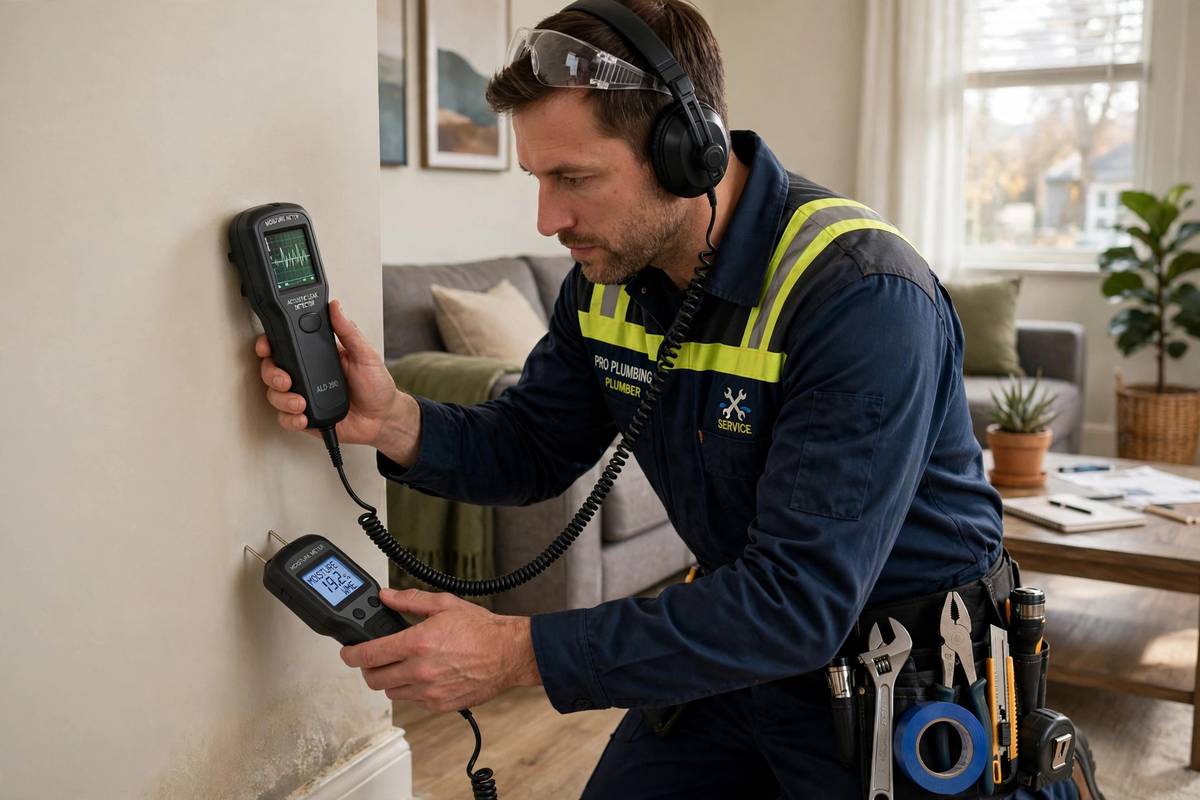
leak detection Lakewood CO — A water bill that jumps for no reason, a damp patch with no source, the sound of running water when every tap is off — leak detection in Lakewood, CO, finds the leak you cannot see. Call (720) 909-6690. We are open 24 hours, every day, from 200 Union Blvd in Lakewood.
We locate the leak with acoustic and thermal tools and pressure testing before any wall is opened or any floor is cut.
A targeted repair starts with a located leak. We do not open drywall on a hunch and hope the pipe is behind it.
You hear where the leak is, what caused it, and what the repair involves before any work starts.
We work in Lakewood’s neighborhoods every day, from Applewood to Green Mountain, and we stand behind the work we leave behind.
Leak detection covers the search — and the plain-language answer about what was found and what happens next.
We check the meter, the pressure, and the visible plumbing first, to narrow the search before any equipment comes out.
Listening equipment picks up the sound of water escaping a pressurized line behind walls and under slabs.
A thermal camera shows the warm or cool patch a hidden leak leaves in a wall or floor, narrowing the search to a small area.
A leak under the slab gets located, not guessed at. See slab leak repair for what happens once it is found.
Every detection ends with a clear answer: where the leak is, what caused it, and which repair page it belongs to — not a vague report.
A hidden leak gets more expensive every day it runs. Call any hour and talk to the Lakewood team.
Leak detection in Lakewood is the work of finding water that has no visible source. The city’s housing makes that a common job: 56% of homes were built before 1980, with aging copper and galvanized supply lines in pre-1985 homes, freeze–thaw joint stress every winter, and expansive bentonite clay shifting slabs and pulling at under-slab plumbing. A leak in that stock can run for weeks behind a wall or under a floor before anyone sees it — and by then the water bill, the drywall, and the flooring have all felt it.
Detection is finding. Repair is fixing. This page owns the finding. Once the leak is located, the fix belongs to the matching repair page: slab leak repair for a leak under the slab, repiping when the whole system is failing, and frozen and burst pipe repair when a freeze split the line. Your water provider varies by address — Denver Water serves about 60% of Lakewood, with Consolidated Mutual and several smaller districts covering the rest — so the meter check at the start of the visit follows your provider’s setup, not a generic one.

We start at the meter and the pressure gauge. A meter that turns with everything off confirms a leak on your side of the supply.
We isolate sections of the system — hot from cold, upstairs from downstairs — until the leak is confined to one run.
Acoustic equipment and thermal imaging narrow the leak to a small area, so the repair opens a patch, not a wall.
We mark the leak’s location and explain what failed and why, before any repair is discussed.
You get a clear answer: where the leak is, what caused it, and which repair it needs — slab, section, or repipe.
Listening equipment picks up the sound of water escaping a pressurized line behind walls and under slabs.
Shows the warm or cool patch a hidden leak leaves in a wall or floor, narrowing the search to a small area.
Isolating and pressurizing sections of the system shows which run is losing pressure — and by how much.
A meter that turns with every fixture off confirms a leak on the house side of the supply.
Rules out a drain-side leak when the signs point to the waste side of the system instead of the supply side.
Measure dampness in drywall and flooring to map how far the water has spread, not just where it started.
Combines acoustic and thermal readings to locate a leak under the slab before any floor is cut.
Lakewood has adopted the 2021 International Plumbing Code. Repairs that follow detection are done to that standard.
A located leak means a small opening, not a demolition. We open the patch the tools point to, not the whole wall.
We match any repair to the existing system — copper, galvanized, PEX, or PVC — so the joint behaves like the rest of the line.
The meter turns with everything off. We isolate the leak to a hot-water run under the slab and mark it for a slab repair.
Acoustic and thermal readings point to a pinhole in a copper supply line behind the drywall. We open a small patch, not the whole wall.
A hot-water line is leaking under the slab. We locate it precisely, so the repair cuts one section of floor, not the room.
Pressure testing shows the supply line is losing water underground. We trace it to a failed joint in the yard and explain the repair.
Lakewood’s leaks follow the city’s pipe eras. The 1940s–50s blocks of Morse Park, Eiber, and Daniels Gardens have galvanized supply lines at the end of their life, with pinholes that start small and grow. The 1960s–70s stock across Applewood, Green Mountain, and Carmody has copper supply lines that fail at joints stressed by freeze–thaw cycles. And the whole city sits on bentonite clay that swells when wet and shrinks when dry, stressing under-slab plumbing and widening joint gaps in sewer lines. A leak in Lakewood is rarely a mystery material — it is usually an era, a joint, and a winter.
1950s–60s homes with galvanized supply lines and clay laterals, where pinhole leaks hide behind finished basements and wet bars.
The deepest era stack in Lakewood, from 1930s homes to 1970s infill, so a single street can hide lead-era, galvanized, and copper leaks.
Lakewood’s oldest surviving housing core, where century-old supply lines make the meter check the first step, not the last.
Terraced hillside lots with walk-out lower levels, where a leak on the downhill side can travel a long way before it surfaces.
Expansive clay swells when wet and shrinks when dry, stressing under-slab plumbing and widening joint gaps.
Ninety to 120 freeze–thaw cycles a winter work every joint in the system, and the weakest one eventually lets go.
Pre-1985 supply lines in Lakewood are at the age where pinholes, joint failures, and slab leaks become routine.
A damp patch grew on a bedroom wall for weeks with no visible source. The household feared the whole wall would have to come down.
Acoustic and thermal readings pointed to a pinhole in a copper supply line. We opened a small patch, repaired the section, and the wall dried out.
Maintenance: A damp patch with no source is a leak until proven otherwise. Call while it is a patch, not a room.
A warm spot on the floor and a rising water bill pointed under the slab, but nobody knew where. The household feared the whole floor would be cut.
We located the leak to a single hot-water run and marked it. The repair cut one section of floor instead of the room.
Maintenance: A warm spot on a slab floor is almost always a hot-water line leaking underneath. Do not wait for the bill to confirm it.
The water bill doubled with no change in use, and the household assumed the meter was wrong. The meter was fine — a supply line was leaking underground.
A meter check confirmed the leak, pressure testing isolated it to the yard run, and we traced it to a failed joint. The bill returned to normal the next cycle.
Maintenance: If the bill jumps and nothing changed in the house, check the meter with everything off. If it turns, call.
A hidden leak is cheap to find early and expensive once the water has had a month to work. These are the failures we get called for most.
A sudden, unexplained rise in the bill is the most common first sign of a hidden leak. A meter check confirms it in minutes.
A damp patch with no visible source means water behind the surface. Acoustic and thermal tools find it without opening the whole wall.
A warm spot on the floor or a bill that keeps climbing points under the slab. We locate the leak before any floor is cut.
Pressure that drops across all fixtures at once can mean a supply line is leaking underground or under the slab.
great service
Very impressed did a great job
Amazing company! These guys would put Mario and Luigi to shame. Very detail oriented and thorough with their jobs and surprisingly affordable. Also extremely quick with follow up and responding to messages and phone calls.
The most common signs are a water bill that jumps for no reason, a damp patch or musty smell with no visible source, the sound of running water when every tap is off, a warm spot on a slab floor, and water pressure that drops across all fixtures at once. Any one of these is worth a call.
We start with a meter and pressure check to confirm the leak and narrow it to one section of the system. Then acoustic listening equipment and a thermal camera narrow it to a small area, so the repair opens a patch, not a wall. For a slab leak, the same tools locate the failed run under the floor before anything is cut.
Check the meter with every fixture and appliance off — if it is still turning, water is leaving the house somewhere. Note the reading, then call (720) 909-6690. Your provider varies by address — Denver Water serves about 60% of Lakewood, with Consolidated Mutual and smaller districts covering the rest — so the meter setup follows your provider.
A slab leak is one kind of hidden leak — a supply line leaking under the concrete slab. It shows up as a warm spot on the floor, a bill that keeps climbing, or damp flooring with no visible source. Detection finds it; slab leak repair fixes it once the failed run is located.
Not seeing your question? Call the local team at (720) 909-6690 and describe what is happening — we will tell you honestly whether it needs a crew now.
Ask the local teamReach us any hour at (720) 909-6690. A real person answers, day or night. Tell us what tipped you off — the bill, the damp patch, the sound — and we will talk through the meter check first.