Open 24 hours, every day
Call (720) 909-6690 any hour — day or night.
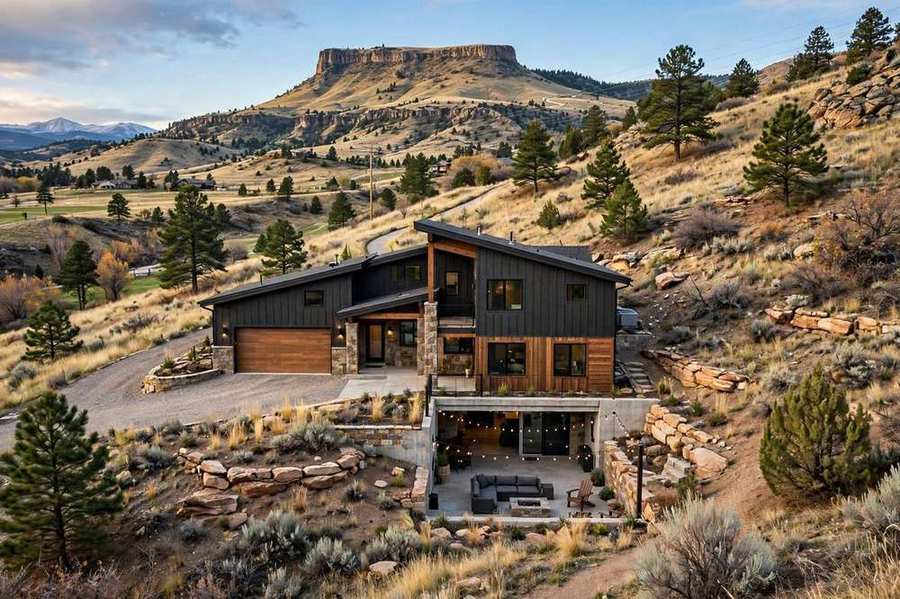
Plumbing in Foothills is foothill-slope drainage. The 1960s-70s smaller-lot homes here meet rising ground toward Green Mountain Park, so the distinct issue is sloped-lot drainage, walk-out lower levels, and sump and backwater protection on downhill fixtures. We are open 24 hours, every day, and you reach us by phone at (720) 909-6690.
Call (720) 909-6690 any hour — day or night.
We explain the approach before work starts.
Equipped vehicles and respectful cleanup.
Neighbors serving neighbors with follow-through.
Foothills is smaller-lot single-family homes, developed in the 1960s and 1970s, near William F. Hayden Green Mountain Park and Bear Creek Lake Park. No median construction year has been found for Foothills as a standalone area, so we publish the 1960s-70s era rather than a single figure. Homes of this era typically have copper supply lines, cast-iron or ABS drains, and clay laterals, with an Orangeburg tail risk for the earliest 1960s builds. The homes are typically basement or split-level and garden-level construction, and hillside lots near the foothills may have walk-out basements. The foothill-edge location means elevation change across the neighborhood and longer, sloped laterals, and that is the whole story: the distinct issue here is sloped-lot drainage, not the flat-grid lateral failures of north Lakewood.
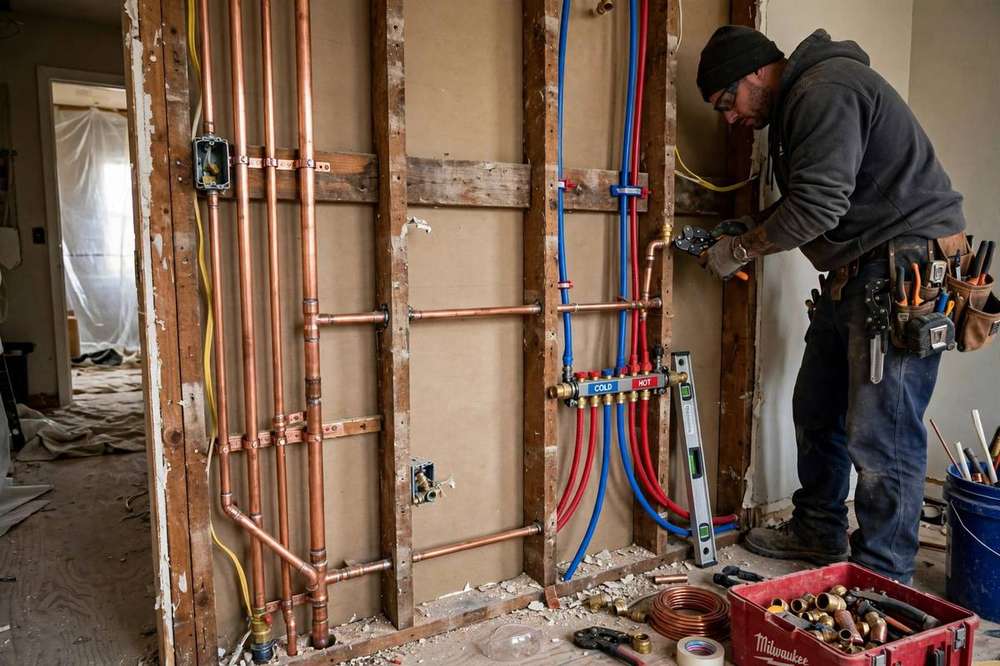
Foothills is where 1960s-70s smaller-lot homes meet rising ground toward Green Mountain Park, so the distinct issue is sloped-lot drainage, walk-out lower levels, and sump and backwater protection on downhill-side fixtures, rather than the flat-grid lateral failures of north Lakewood. Bear Creek Lake Park and William F. Hayden Green Mountain Park are nearby, with Beech Park and Hutchinson Park closer in, and the Green Mountain Water and Sanitation District serves the area. These nine services match that slope.
Walk-out lower levels and garden levels on a slope need a sump pump that works when the water rises. The pump is installed, the discharge is checked, and the system is confirmed to keep up in a storm, since a pump that sits idle and a pump that never stops are both warnings.
View service →02Sloped drains carry the load of a 1960s-70s home across several levels, and the lowest fixtures back up first. The drain is cleared and the run downstream is checked, so a cleared trap does not back up again the following week.
View service →03Running a camera through a sloped lateral shows every joint, including the offsets where the ground has shifted. That picture decides the fix on a hillside lot: a spot repair or a full replacement.
View service →04A leak on a sloped lot can travel downhill before it shows, and a damp patch far from any fixture usually means the failure is somewhere else entirely. We trace the water to its source with inspection equipment before opening anything.
View service →05A 1960s-70s heater that runs out of hot water early usually has a failing element or a tank full of sediment. The replacement is fitted to code, and the venting, supply, and relief discharge are confirmed before the job is done.
View service →06The first freeze usually lands between late October and mid-November, and the exposed lines on a hillside lot, in unheated lower levels, and at walk-out walls split first. The break is repaired and the run around it is checked, so the same line does not freeze again.
View service →07A trenchless replacement needs far less digging than an open trench, which matters on a slope where a long cut would take out the grade. The line is camera-checked first, and the method is confirmed to fit the run.
View service →08New faucets, toilets, and fixtures in a 1960s-70s home need to fit the existing rough-in across several levels. We fit each one to its rough-in and run it under normal use before leaving.
View service →09A backed-up downhill fixture or a burst line cannot wait, and a walk-out lower level floods fastest when the water is already rising. At (720) 909-6690 the phone is answered any hour, and the failure causing the damage comes first.
View service →Foothills work starts with the grade. The first questions are which side of the house is downhill, where the walk-out lower level sits, and how the lateral runs down the slope, because the lowest fixtures back up first and the lateral shifts with the ground. Only then does the job itself begin. The code basis is Lakewood's adoption of the 2021 IPC, Municipal Code Chapter 14.05, with the Colorado Plumbing Code underneath. Sump and backwater work tied to a sewer replacement, gas piping, water-heater replacement, fixture installs, drain-waste-vent work, water service lines, and repiping all need a permit when triggered, and the fee is valuation-based, so the Permit Counter at 303-987-7500 confirms the amount.
Sloped lots drain toward the downhill side, so the lowest fixtures take the load first. We trace the drain runs from the bottom up, check the sump and backwater protection together, and camera the lateral before any digging.
Walk-out lower levels sit partly below grade on the downhill side, which makes them the first to take water in a storm and the hardest to dry out. We check the sump, the discharge route, and the lowest fixtures as a set, because they fail together.
Laterals on a slope run longer than a flat-grid run, and the ground shifts in bentonite clay, so joints offset over time. A camera inspection shows which joints have moved, and the replacement is planned around the full length of the sloped run.
Lakewood Municipal Code Chapter 14.05 adopts the 2021 IPC by Ordinance O-2023-16. The 2021 IRC, Chapters 25-33, covers the residential work on the sloped lots.
Resolution R-2025-69, effective 1 January 2026, makes permit fees valuation-based. Confirm the figure for the specific job with the Permit Counter at 303-987-7500.
Foothills' problems come from the slope, not from pipe age alone. Downhill fixtures back up first, walk-out lower levels take groundwater, sloped laterals shift in clay, and the 1960s-70s copper and clay underneath is aging on the same clock as the rest of west Lakewood.
A downhill fixture backs up first when the line is partly blocked or the main surcharges, because it is the lowest point on the run. A toilet or floor drain that backs up only in a storm usually points to the run below, not to the fixture.
Groundwater finds a walk-out lower level after rain and snowmelt, especially where the grade falls toward the house. A sump pump that cannot keep up, or a discharge that runs back toward the foundation, turns a storm into a flooded lower level.
Laterals on a slope shift as the clay ground moves, and the joints offset over time. Roots get in at the offsets, the line slows, and a camera inspection shows which joints have moved.
Copper supply lines from the 1960s-70s can open pinhole leaks at fittings after decades, and clay laterals fail at the joints where roots get in. Pressure readings at several fixtures and a camera run through the lateral show whether the problem is one run or the whole system.
Foothills sits in west Lakewood near Green Mountain Park and Bear Creek Lake Park, and we use the parks as the anchors for routing. The ground rises toward the park, and the streets follow the slope, so knowing where a call sits on the hill tells us which side is downhill.
Green Mountain Park sits beside Foothills, and the ground rises toward it. It is the reference point for the uphill side of the neighborhood.
Bear Creek Lake Park sits nearby to the south, and it is the reference point for the southern edge of Foothills.
Beech Park is one of the smaller parks nearby, and it helps us split calls across the neighborhood's streets.
Hutchinson Park is another smaller park nearby, and it anchors the streets around it.
The Green Mountain Water and Sanitation District serves this area. The provider follows the address, so we confirm it per job.
The ground rises across Foothills toward Green Mountain Park, and the elevation change is what makes the laterals longer and sloped rather than flat.
We cover the whole Foothills neighborhood, from the lower streets to the hillside lots near Green Mountain Park. The nearby neighborhoods below are the other west and south Lakewood areas we work in.
Green Mountain is the west-Lakewood neighborhood wrapped around Green Mountain Park, with 1960s-80s housing on terracing, hilly streets. Its sloped lots are the closest comparison for Foothills.
Bear Creek is the creekside neighborhood to the south, with 1980s-90s housing and sump and backwater work near Bear Creek. Its below-grade jobs are the comparison for Foothills' walk-out levels.
Glennon Heights is the west side's old pocket, with a 1940s-50s workers'-housing core inside 1960s-70s west Lakewood, and the same Ordnance Plant origin as Daniels Gardens.
Carmody pairs 1970s split-levels with a western horse fringe, so its lower-level bathrooms and barn hydrants are the below-grade comparison for Foothills.
The jobs below are the kinds of calls that come up most often in Foothills. They follow the neighborhood's slope: walk-out lower levels, downhill fixtures, and sloped laterals that shift in clay.
A walk-out lower level with water on the floor after a storm usually has a sump pump that cannot keep up or a discharge that runs back toward the house. The pump, the float, the discharge route, and the power supply are checked together, and the part that is actually failing is fixed.
A downhill fixture that backs up first, while the uphill fixtures drain fine, usually has a partial blockage or a fault in the lower run. The lower run is camera-checked and cleared, and the fixtures feeding it are checked, so the same fixture does not back up again next week.
A sloped lateral with joints shifting in clay gets a camera inspection first. The picture shows which joints have offset, and the replacement is planned around the full length of the sloped run.
Amazing company! These guys would put Mario and Luigi to shame. Very detail oriented and thorough with their jobs and surprisingly affordable. Also extremely quick with follow up and responding to messages and phone calls.
Arrived in less than an hour and completed the job in less than two hours for a very good price.
Emergency Plumber Lakewood came through for me when I had a problem with my water. They were easy to work with, explained everything, and got it fixed fast. I'd definitely call them again and recommend them to anyone who needs a plumber. 5 stars!
Foothills' year is ruled by the slope: spring snowmelt and rain, summer storms, fall freeze, and winter cold. The walk-out lower levels feel each season first, while the 1960s-70s pipework above grade mostly follows the usual calendar.
Snowmelt and spring rain raise the water table on the slope, and the sump pumps in the walk-out lower levels earn their keep. A pump that sat idle all winter should be run and checked before the first heavy rain, not in the middle of it.
Summer storms test the backwater protection and the sump discharge on a sloped lot. A downhill fixture that backs up only when it rains hard, or a discharge that pools against the foundation, shows up in July and August.
The first freeze usually lands between late October and mid-November, and the hillside lots need their exterior lines and hose bibbs shut off before it arrives. A sump discharge that freezes where it leaves the house will back water into the pit.
Winter is the hard season for exposed pipework on the slope. February 2021 is the benchmark: the 14th reached only 1F and dropped to -14F overnight, and a split line in a walk-out lower level floods before anyone notices.
Foothills sits among other Lakewood neighborhoods with their own housing and pipework, and we work in all of them. If you are in one of these areas, the same team covers your street.
Foothills jobs are usually about the slope, so the questions below are written for hillside homes and walk-out lower levels. The answers should be specific to the lot and the house.
The downhill side of a house decides which fixtures back up first and where the water goes. Ask which side is downhill, and what that changes about the work.
A sump pump is only as good as where its water goes. Ask whether the discharge can freeze at the outlet, and whether the pump keeps power when the house loses it.
When the main surcharges, the downhill fixtures back up first. The question is whether those fixtures have backwater protection, and whether the valve can be reached and actually closes.
Sump and backwater work tied to a sewer replacement, gas piping, water-heater replacement, fixture installs, drain-waste-vent work, water service lines, and repiping all need a permit when triggered. Ask whether the job needs one and who will arrange it.
Before work starts, the scope should be written down: the fixtures, the pipework, any permit, and the cleanup. Ask for it in writing and check that it matches the house.
Lakewood's Municipal Code Chapter 14.05, under Ordinance O-2023-16, adopts the 2021 IPC, and Foothills sump, backwater, and lateral work follows it.
Underneath the city's adoption, the Colorado Plumbing Code, 3 CCR 720-1, applies, with the State Plumbing Board's DORA licensing tiers behind it.
Foothills permit jobs usually mean sump and backwater work tied to sewer replacement, water-heater replacement, or fixture installs.
Resolution R-2025-69, effective 1 January 2026, prices permit fees by valuation. The Permit Counter, 303-987-7500, confirms the figure for the job.
Open 24 hours a day, every day. The phone at (720) 909-6690 is answered any hour.
We work out of 200 Union Blvd, Lakewood, CO 80228.
5.0 stars, from 9 Google reviews that are all 5-star.
Because the 1960s-70s smaller-lot homes here meet rising ground toward Green Mountain Park. Sloped-lot drainage, walk-out lower levels, and sump and backwater protection on downhill fixtures are the distinct issues, rather than the flat-grid lateral failures of north Lakewood.
A walk-out lower level is a basement or garden level that opens at ground level on the downhill side of a sloped lot. Hillside lots near the foothills may have walk-out basements, and their fixtures sit below grade.
Homes of the 1960s-70s era typically have copper supply lines, cast-iron or ABS drains, and clay laterals, with an Orangeburg tail risk for the earliest 1960s builds. No median construction year has been found for Foothills as a standalone area.
The Green Mountain Water and Sanitation District serves this area. In most Lakewood districts the homeowner owns the sewer lateral to the main, and the provider follows the address, so we confirm it per job.
Yes. We are open 24 hours, every day, and the phone number is (720) 909-6690. A burst pipe or a sewer backup in a downhill bathroom is an emergency call at any hour.
Not seeing your question? Call (720) 909-6690 — we are open 24 hours, every day.
Ask the local teamCall (720) 909-6690 any hour. We are open 24 hours, every day, for Foothills' lower streets and its hillside lots alike.