Open 24 hours, every day
Call (720) 909-6690 any hour — day or night.
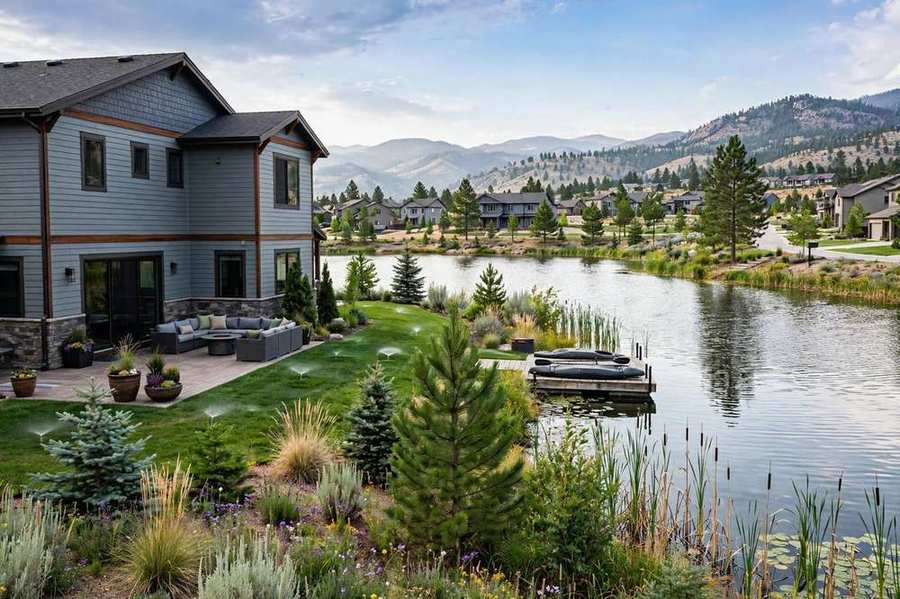
Plumbing in Grant Ranch starts with two checks: your jurisdiction and your HOA. Much of marketed Grant Ranch sits in Denver or unincorporated Jefferson County with Littleton mailing addresses, and only the Lakewood portion is covered on this page. We are open 24 hours, every day, and you reach us by phone at (720) 909-6690.
Call (720) 909-6690 any hour — day or night.
We explain the approach before work starts.
Equipped vehicles and respectful cleanup.
Neighbors serving neighbors with follow-through.
Grant Ranch is a planned community of about 8,000 residents at the southern edge of Lakewood, with a mix of single-family homes and a small amount of multifamily in the southern portion, plus condos, townhouses, and duplexes along manicured sidewalks, in a lakefront setting on Raccoon Creek with a village center, a private marina, a pool, pickleball and tennis, and a clubhouse. The majority of the homes were built in the 1980s and 1990s. The sources disagree on the median construction year, so we publish the era range rather than a single settled figure. Homes of this era typically have copper or CPVC supply lines and ABS or PVC drains, with late-1990s and 2000s filings typically having copper and PEX. The Grant Ranch HOA governs exterior work and common areas, and the community sits within three jurisdictions, Jefferson County, Denver, and Lakewood, and carries Denver and Littleton mailing addresses with ZIP 80123 despite being in Lakewood's south neighborhoods.
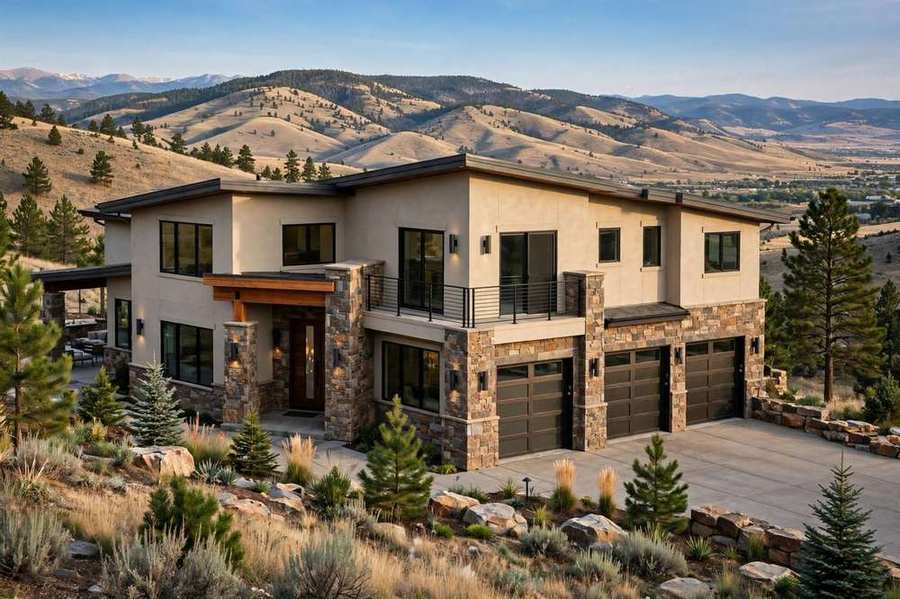
Grant Ranch is the HOA and multi-jurisdiction planned community at Lakewood's southern edge: about 8,000 residents in a 1980s-90s community of single-family homes with a small amount of multifamily in the south, condos, townhouses, and duplexes along manicured sidewalks, and a lakefront setting on Raccoon Creek with a village center, private marina, pool, and clubhouse. The community sits within three jurisdictions, Jefferson County, Denver, and Lakewood, and carries Denver and Littleton mailing addresses, so the first question on any job is which jurisdiction the address sits in. These nine services match that profile.
Grant Ranch homes with irrigation, pools, and shared water features rely on backflow assemblies that need testing and paperwork. The assembly is tested and the result is recorded for the property's records.
View service →02New faucets, toilets, and fixtures in a 1980s-90s home need to fit the existing rough-in. Each one is fitted to the rough-in and tested under normal use before we leave.
View service →03A 1980s-90s heater that cannot keep up usually has a failing element or a tank full of sediment. The new unit is fitted to code, and the venting, the supply, and the temperature and pressure relief discharge are confirmed.
View service →04Drains in a planned community carry the load of many similar homes, and a slow drain usually means buildup in the run, not a single trap. We clear the drain and check the run downstream, so a cleared trap does not back up again the following week.
View service →05Walk-out basements in Grant Ranch need a sump pump that works when the water rises. We fit the pump, test the discharge, and confirm it keeps up in a storm, because a pump that never runs and one that runs constantly are both warnings.
View service →06A leak in a 1980s-90s home can travel through walls and finished lower levels before it shows. We trace the water to its source with inspection equipment before opening anything, so the repair lands in the right place.
View service →07A camera inspection shows the lateral joint by joint, including root intrusion and offsets. On a planned-community lot, that picture decides whether the fix is a spot repair or a full replacement.
View service →08Moderately hard water leaves scale in tanks and fixtures over time. A softener or filtration system is fitted to the home's water and tested under normal use, and the existing lines are checked first so the new system does not inherit an old problem.
View service →09A backed-up walk-out basement or a burst line cannot wait. We answer at (720) 909-6690 around the clock, and the failure that is causing the damage comes first.
View service →Grant Ranch work starts with jurisdiction, not with the fixture. The address can sit in the City of Lakewood, Denver, or unincorporated Jefferson County, and the permit and utility answers follow the actual jurisdiction, not the mailing address. Exterior and common-area work also needs HOA approval first, and homes from the 1978-1995 window are checked for polybutylene before a repipe is scoped. For work in the Lakewood portion, the code is the 2021 International Plumbing Code as adopted in Municipal Code Chapter 14.05, with the Colorado Plumbing Code underneath. A Lakewood permit is required for fixture installs, sewer replacement, gas piping, water service lines, repiping, drain-waste-vent work, and water-heater replacement, and the fee runs on valuation under Resolution R-2025-69, so the Permit Counter at 303-987-7500 confirms the figure for a Lakewood job.
Before any work is scoped, the jurisdiction is established: City of Lakewood, Denver, or unincorporated Jefferson County. That decides which code, which permit counter, and which utility answers apply, and it is settled before a wall is opened, not after.
Exterior work and common-area work in a planned community need HOA approval first. We confirm what the Grant Ranch HOA requires before the job is scheduled, so the work does not have to be undone or redone.
Homes from the 1978-1995 window are checked for polybutylene supply lines before a repipe is scoped. Grey or blue plastic supply lines are the sign to look for, and the check decides whether the repipe joins the scope of the work.
For the Lakewood portion, the 2021 IPC applies through Municipal Code Chapter 14.05, Ordinance O-2023-16. Residential work there also follows the 2021 IRC, Chapters 25-33.
In Lakewood, Resolution R-2025-69, effective 1 January 2026, prices permits by valuation. The Permit Counter at 303-987-7500 confirms the fee for a Lakewood job.
Grant Ranch's problems are the problems of a 1980s-90s planned community: polybutylene checks for the 1978-1995 window, walk-out basement sump and ejector failures, irrigation and backflow assemblies, and 1990s fixtures at the end of their service life. The work is HOA approval and fixture replacement, not emergency repiping of an old suburb.
Homes from the 1978-1995 window may have polybutylene supply lines, and the check comes before any repipe is scoped. Grey or blue plastic supply lines are the sign to look for, and a home that has them needs a different plan from a home that does not.
Walk-out basements sit partly below grade, and a sump or ejector that cannot keep up turns a storm into water on the floor. We check the pump, the float, the discharge route, and the ejector together, because they fail as a set.
Irrigation systems and backflow assemblies serve the planned community's landscaping, marina, and clubhouse grounds. An assembly that will not hold pressure, or a system that loses pressure when the irrigation runs, points to the backflow device or the irrigation lines.
Fixtures from the 1990s are at the end of their service life: shutoffs that will not close, faucets that drip, and toilets that run. A shutoff that fails when it is needed most is the usual first sign, and the fixture is replaced before it becomes an emergency.
Grant Ranch sits at the southern edge of Lakewood, and we use the village center and Raccoon Creek as the anchors for routing. The lakefront setting and the planned-community layout make this neighborhood easy to navigate once you know the center, and the jurisdiction boundary is the fact that matters most.
The Grant Ranch Village Center sits at the heart of the community, with the private marina, pool, pickleball and tennis, and clubhouse. It is the reference point for the neighborhood.
Raccoon Creek runs through the lakefront setting of Grant Ranch, and it is the water feature that defines the community's layout.
The Grant Ranch HOA governs exterior work and common areas across the community. It is the first check before any exterior or common-area work starts.
Grant Ranch sits at the southern edge of Lakewood, and much of marketed Grant Ranch is in Denver or unincorporated Jefferson County. The boundary is the fact that decides jurisdiction.
The Grant Water and Sanitation District serves this area. The provider follows the address, so we confirm it per job.
Grant Ranch carries Denver and Littleton mailing addresses with ZIP 80123, despite being in Lakewood's south neighborhoods. The mailing address does not decide the jurisdiction.
We cover the Lakewood portion of Grant Ranch only. Much of marketed Grant Ranch sits in Denver or unincorporated Jefferson County, and those addresses need their own jurisdiction's answers. The nearby neighborhoods below are the other south Lakewood areas we work in.
Bear Creek is the creekside neighborhood to the north, with 1980s-90s housing and sump and backwater work near Bear Creek. Its below-grade jobs are the comparison for Grant Ranch's walk-out basements.
Carmody pairs 1970s split-levels with a western horse fringe, so its lower-level bathrooms and barn hydrants are the below-grade comparison for Grant Ranch.
Foothills is the west-side neighborhood where 1960s-70s homes meet rising ground toward Green Mountain Park, and sloped-lot drainage is the distinct issue there.
Green Mountain is the west-Lakewood neighborhood wrapped around Green Mountain Park, with 1960s-80s housing on terracing, hilly streets.
The jobs below are the kinds of calls that come up most often in Grant Ranch. They follow the planned-community profile: polybutylene checks, walk-out basements, and HOA approval before exterior work.
A 1980s home gets checked for polybutylene before any repipe is scoped. Grey or blue plastic supply lines are the sign to look for, and the check decides whether the repipe joins the scope of the work.
A walk-out basement with a sump that is not keeping up gets the pump, the float, the discharge route, and the ejector checked together. The part that is actually failing is fixed, rather than the whole system being replaced on a guess.
Exterior work in a planned community needs HOA approval first. We confirm what the Grant Ranch HOA requires before the job is scheduled, so the work does not have to be undone or redone.
Amazing company! These guys would put Mario and Luigi to shame. Very detail oriented and thorough with their jobs and surprisingly affordable. Also extremely quick with follow up and responding to messages and phone calls.
Arrived in less than an hour and completed the job in less than two hours for a very good price.
Emergency Plumber Lakewood came through for me when I had a problem with my water. They were easy to work with, explained everything, and got it fixed fast. I'd definitely call them again and recommend them to anyone who needs a plumber. 5 stars!
Grant Ranch's year follows the planned-community calendar: spring startup for irrigation and backflow, summer as the window for exterior and fixture work, fall freeze preparation for irrigation lines, and winter for the indoor systems. The HOA calendar matters here as much as the weather.
Spring is when irrigation systems start up and backflow assemblies are tested. A system that will not hold pressure after the winter shows up in spring, and the assembly is tested before the landscaping season begins.
Summer is the window for exterior work, fixture replacement, and repipe assessments, when the ground is workable and the HOA approval can be arranged in advance. Irrigation and backflow work continues through the season.
The first hard freeze usually arrives from late October to mid-November. Irrigation lines, hose bibbs, and exterior runs are the risk here, and the irrigation system needs to be drained before the freeze.
Winter is the season for indoor work: fixture replacement, water-heater work, and sump checks in the walk-out basements. The February 2021 cold snap, when the high on 14 February was 1F with a low of -14F, is the reminder of how cold it can get.
Grant Ranch sits among other Lakewood neighborhoods with their own housing and pipework, and we work in all of them. If you are in one of these areas, the same team covers your street.
Grant Ranch jobs start with jurisdiction and HOA approval, so the questions below are written for a planned community that spans three jurisdictions. The answers should be specific to the address.
Grant Ranch sits within three jurisdictions, Jefferson County, Denver, and Lakewood, and the mailing address does not decide which one applies. Ask whether the address sits in the City of Lakewood, because that decides the code and the permit counter.
Exterior work and common-area work need HOA approval. Ask whether the job needs it, and what the Grant Ranch HOA requires before the work is scheduled.
Homes from the 1978-1995 window may have polybutylene supply lines. Ask whether the home should be checked first, and what grey or blue plastic lines would mean for the plan.
Fixture installs, sewer replacement, gas piping, water service lines, repiping, drain-waste-vent work, and water-heater replacement each need a Lakewood permit when the work triggers one. Ask whether the job needs one and who will arrange it.
You should know what is included before work starts: the fixtures, the pipework, the permit if one is needed, and the cleanup. Ask for the scope in writing and check that it matches the home.
For the Lakewood portion of Grant Ranch, the 2021 IPC applies through Municipal Code Chapter 14.05, Ordinance O-2023-16.
3 CCR 720-1, the Colorado Plumbing Code, sits beneath the city's adoption, with DORA licensing tiers from the State Plumbing Board behind it. Other jurisdictions apply their own adopted codes.
Grant Ranch permit jobs in the Lakewood portion usually mean repiping, sewer replacement, water-heater replacement, or fixture installs.
Lakewood permit fees are valuation-based under Resolution R-2025-69, effective 1 January 2026. Confirm the figure for a Lakewood job with the Permit Counter, 303-987-7500.
Open 24 hours, every day of the week. Call (720) 909-6690 at any hour, day or night.
Our Lakewood headquarters: 200 Union Blvd, Lakewood, CO 80228.
9 Google reviews, all 5-star, adding up to a 5.0-star rating.
No. Grant Ranch sits within three jurisdictions, Jefferson County, Denver, and Lakewood, and much of marketed Grant Ranch is in Denver or unincorporated Jefferson County with Littleton mailing addresses and ZIP 80123. This page covers the Lakewood portion only.
Because the Grant Ranch HOA governs exterior work and common areas. Exterior plumbing work, irrigation, and anything in a common area needs HOA approval before it starts, and that approval has to be settled before the work is scheduled.
The polybutylene window runs from 1978 to 1995, and Grant Ranch's 1980s-90s era falls inside it. Polybutylene supply lines are a known failure risk, so a home of this era needs the check before the supply system is assumed to be sound.
Homes of the 1980s-90s era typically have copper or CPVC supply lines and ABS or PVC drains, with late-1990s and 2000s filings typically having copper and PEX. The sources disagree on the median construction year, so the era range is the safe statement.
Yes. We are open 24 hours, every day, and the phone number is (720) 909-6690. A burst pipe or a sewer backup in a walk-out basement is an emergency call at any hour.
Not seeing your question? Call (720) 909-6690 — we are open 24 hours, every day.
Ask the local teamCall (720) 909-6690 any hour. We are open 24 hours, every day, for the Lakewood portion of Grant Ranch.