Open 24 hours
Call any hour, any day — the phone is answered around the clock.
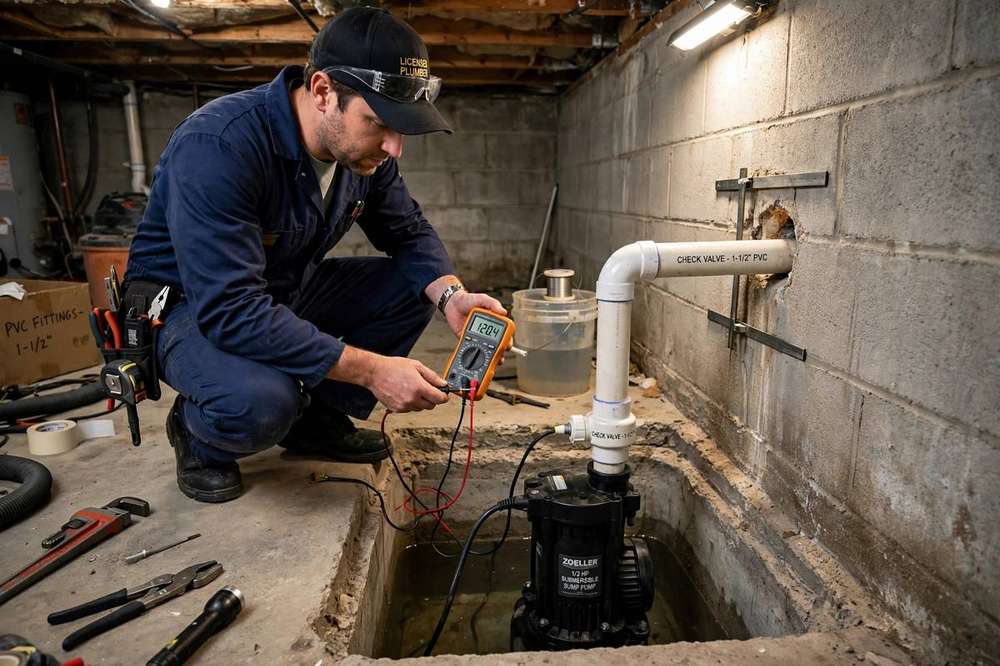
Sump pump installation in Lakewood, CO protects basements and lower levels where groundwater and spring snowmelt collect faster than the ground can drain them. The pump sits in a pit at the lowest point, switches on when water rises, and moves it outside — and the battery backup keeps it running when a storm takes the power out, which is exactly when the water is coming hardest. If your basement has flooded once, the pump is the conversation to have before the next melt.
Call any hour, any day — the phone is answered around the clock.
We explain what we found and what the options are before work starts.
Equipped vehicles and a clean job site when we leave.
A Lakewood business at 200 Union Blvd — neighbors serving neighbors.
A sump system is a pump, a pit, a discharge route, and a backup — and the job is all four, not just the pump. Here is what it covers.
A pit at the lowest point of the basement or crawl space, with a pump sized to the water the house actually sees — not a default size.
A battery backup that keeps the pump running through a power outage, because storms that bring water also bring outages.
A discharge line that carries water outside and away from the foundation, with a check valve so it cannot flow back into the pit.
A high-water alarm and a full test of the pump, the float, and the backup before the job is signed off.
Repair of a pump that has failed, and replacement of a unit that has reached the end of its service life.
What to check each spring before the melt, and what the sounds and cycles of the pump are telling you.
Call (720) 909-6690 — open 24 hours, every day — and tell us what is happening.
A sump pump moves water out of the lowest point of your home before it becomes a flooded basement — and in Lakewood, the water comes from snowmelt, storms, and high groundwater.
Lakewood's groundwater pockets sit near Bear Creek, Green Mountain, Kendrick Lake, and Lakewood Gulch, and the city's expansive bentonite clay holds water against foundations instead of letting it drain away. Spring snowmelt is the season: the snowpack melts, the ground is still frozen or saturated, and the water has nowhere to go but down — into basements and lower levels. Summer thunderstorms add a second season, and the pattern that matters most is the storm that takes the power out while the rain is falling. A pump without a backup stops exactly when it is needed most, which is why battery backup is part of the install, not an add-on. Our emergency plumbing services page covers the call when water is already on the floor; this page covers the system that keeps it from getting there.
Sizing is the house's, not a catalog's. A pump that is too small runs constantly and burns out; a pump that is too large short-cycles and wears out the float switch. The right size follows the water the house actually sees: the height of the water table, the size of the drainage area feeding the pit, and the vertical lift to the discharge point. The discharge route matters as much as the pump — water moved from the pit to the foundation wall is not moved at all, and a check valve stops it flowing back when the pump stops. Floodplain context matters too: homes near Bear Creek and Lakewood Gulch sit in or near mapped floodplain, and a sump pump is one part of flood-resilient below-grade plumbing, alongside backwater protection. And when a pump fails in a storm, our frozen and burst pipe repair page is the wrong call — the pump itself is this page's job, repair included.

We look at where water enters, how the basement floods, and where the lowest point is — the pit goes where the water already goes.
The water table, the drainage area, and the vertical lift to discharge decide the pump size. A default size is not fitted.
The pit is set at the lowest point, the pump is fitted with a float switch, and the discharge line is run outside and away from the foundation.
The battery backup is fitted and tested, and a high-water alarm is set so a failure is heard before the floor is wet.
The pump, float, backup, and alarm are all tested, and we walk through the spring check — what to test before the melt, and what the cycles mean.
Where the water comes from and how high it rises — the basis for sizing, not a guess.
Matched to the water the house sees, the drainage area, and the lift to discharge.
Sized to run the pump through a storm outage, and tested on the day.
Stop discharged water flowing back into the pit when the pump stops.
Sound before the floor is wet, so a failed pump is a repair call, not a flood.
Carries water outside and away from the foundation, where it cannot return.
Groundwater rises with the melt and the basement takes water at the lowest corner. A pit and pump at that corner, with battery backup, moves the water out before it reaches the floor.
The storms bring rain and outages together. A pump without a backup stops when the power goes — the install includes the backup, so the pump runs through the outage.
The pump has reached the end of its service life and the float switch sticks. A replacement pump with a tested backup and alarm takes its place before the next storm.
Lakewood's sump story is water that cannot drain: bentonite clay holds it against foundations, groundwater sits high near Bear Creek, Green Mountain, Kendrick Lake, and Lakewood Gulch, and spring snowmelt arrives while the ground is still frozen or saturated. Homes near Bear Creek and Lakewood Gulch sit in or near mapped floodplain, where sump pumps and backwater protection are part of flood-resilient below-grade plumbing rather than a convenience.
Creekside homes in or near mapped floodplain, where sump pumps and backwater valves matter most.
Groundwater pockets at the foot of the foothills, where spring melt collects fastest.
Lakeside groundwater that rises with the melt and the summer storms.
1970s split-levels with lower-level rooms below grade — sump and backwater territory.
Sloped lots where downhill-side fixtures and lower levels need sump and backwater protection.
The melt season is the sump pump's season — snowpack melts onto frozen or saturated ground.
Expansive soil holds water against foundations instead of letting it drain away.
The storms that bring water also bring power cuts — the battery backup is part of the system.
Bear Creek and Lakewood Gulch floodplain homes need flood-resilient below-grade plumbing.
Before: a Bear Creek basement takes water every spring melt at the lowest corner.
After: a pit and pump at that corner move the water out, and the battery backup keeps the pump running through the storm outages.
Maintenance: Test the pump each spring before the melt — pour water in the pit and watch the pump, the float, and the backup all work.
Before: a summer thunderstorm floods the basement and the power goes out with it.
After: the battery backup runs the pump through the outage, and the high-water alarm sounds if the pump fails.
Maintenance: Check the battery each year. A backup with a dead battery is a pump without a backup.
Before: an old pump's float switch sticks and the basement floods in a storm.
After: a replacement pump with a tested backup and alarm takes its place, and the spring check is on the calendar.
Maintenance: A pump that runs constantly or never runs is telling you something — both are worth a call.
A sump system fails in a few specific ways, and each one has a different answer. These are the problems we see.
Spring snowmelt overwhelms a home with no pump or an undersized one. A pit and pump sized to the house is the answer.
A pump without a backup stops when the storm takes the power. Battery backup is part of the install, not an add-on.
A pump that never stops is either undersized for the water or fighting a failed check valve that lets water flow back. Both are fixed, not ignored.
A stuck float, a failed switch, or a tripped breaker. The pump is tested, the float is freed or replaced, and the alarm is checked.
A missing or failed check valve lets discharged water flow back. The valve is fitted or replaced, and the discharge route is checked.
A sump pump is a system that has to work on the worst night of the year, in the dark, with the power out. The install is planned for that night, not a sunny afternoon.
Emergency Plumber Lakewood holds a 5.0-star rating from 9 Google reviews. Homeowners across Lakewood call us when a main line fails, a water heater quits, or a drain will not clear — and the reviews describe the same things we aim for on every visit: a clear explanation of what is wrong, the options before work starts, and a clean job site when we leave. Call (720) 909-6690 — open 24 hours, every day — to talk through what is happening at your home.
It depends on your home's water. Basements and lower levels near Bear Creek, Green Mountain, Kendrick Lake, and Lakewood Gulch sit in high-water-table pockets, and spring snowmelt floods homes that have no pump. If your basement has taken water once, a pump is the conversation to have before the next melt.
A pump without a backup stops — which is why battery backup is part of our installs. The backup keeps the pump running through a storm outage, and a high-water alarm sounds if the pump fails.
Each spring before the melt, and after any storm that flooded the pit. Pour water into the pit and watch the pump start, the float work, and the backup take over when the power is cut. A pump that runs constantly or never runs is worth a call.
Outside and away from the foundation, through a discharge line fitted with a check valve so water cannot flow back into the pit. Water moved from the pit to the foundation wall is not moved at all.
Not seeing your question? Call (720) 909-6690 — open 24 hours, every day — and talk it through with the local team.
Ask the local teamReach us any hour at (720) 909-6690. Tell us where the water comes in and when it happens, and we will talk through the next step.