Open 24 hours
Call any hour, any day — the phone is answered around the clock.
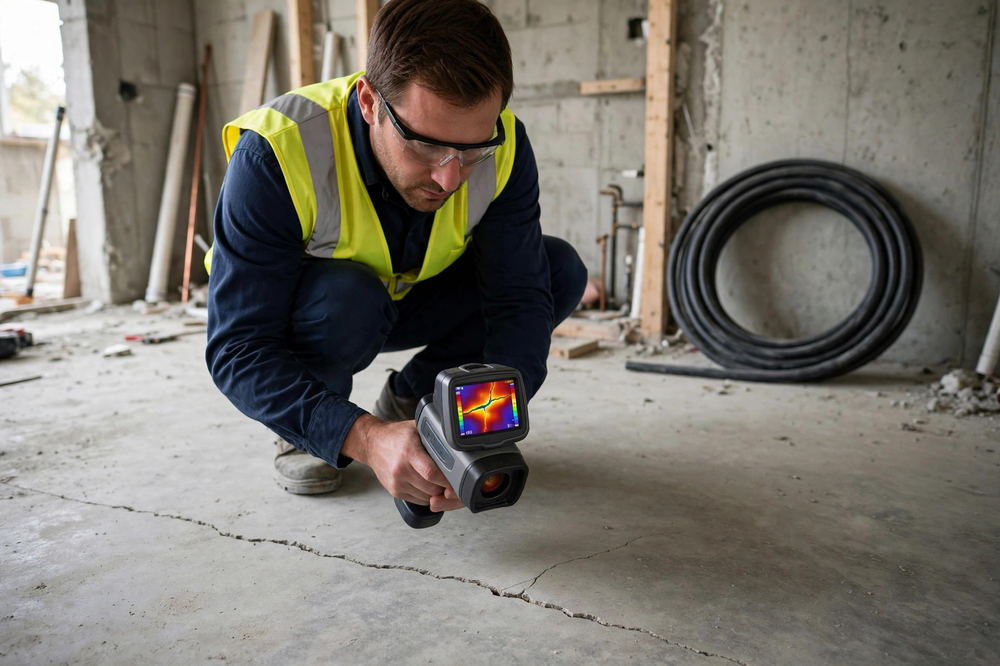
Slab leak repair in Lakewood, CO starts with a question: is the water under your slab coming from a supply line, a drain line, or groundwater? A warm spot on the floor, a water bill that jumps for no reason, and damp carpet at the base of a wall all point to a leak beneath the concrete — and the fix depends on which pipe is leaking and where. We detect first, then repair, re-route, or repipe — in that order.
Call any hour, any day — the phone is answered around the clock.
We explain what we found and what the options are before work starts.
Equipped vehicles and a clean job site when we leave.
A Lakewood business at 200 Union Blvd — neighbors serving neighbors.
A slab leak is a two-part job: find it precisely, then fix it with the least damage to the slab. Here is what the work covers.
Acoustic listening, pressure testing, and thermal imaging narrow the leak to a spot before any concrete is opened. Our leak detection page explains the methods.
A hot-line leak and a drain-line leak are different jobs. Testing tells us which pipe is leaking before we commit to a repair.
Where the leak is isolated and the surrounding pipe is sound, the slab is opened at one point and the failed section is replaced.
Where the under-slab run is failing in several places, a new line is run through walls or the attic instead — no more pipe under the slab.
When leaks keep appearing across the house, the honest answer is a whole-house repipe. Our repiping page covers that decision.
We tell you what needs drying and what to watch after the repair, so dampness does not linger under flooring.
Call (720) 909-6690 — open 24 hours, every day — and tell us what is happening.
A slab leak is a leak in a water or drain line buried in or under the concrete slab your home sits on — and you usually notice it from the symptoms, not the pipe.
The signs are consistent: a warm patch on the floor where a hot-water line leaks, a water bill that climbs with no change in use, damp carpet or buckling flooring, the sound of running water when every tap is off, or a hot-water heater that cycles more than it should. In Lakewood, the driver is often the ground itself. Expansive bentonite clay swells when wet and shrinks when dry, and that movement stresses the copper joints and elbows buried under the slab. Freeze-thaw cycles add to it, and spring thaw often reveals leaks that sat hidden under frozen ground all winter. Homes built before 1985 with copper or galvanized runs under the slab are the most common candidates, and the leak is usually at a joint or elbow rather than in the middle of a straight run.
The repair depends on what the detection finds. A single isolated leak in otherwise sound pipe gets a spot repair: the slab is opened at one point, the failed section is replaced, and the concrete is patched. A line that is failing at several points gets re-routed — a new line run through walls or the attic so no water pipe sits under the slab at all. And when leaks keep appearing in different rooms, the problem is the system, not the spot, and a whole-house repipe is the answer. What a slab leak is not is foundation work: we fix the plumbing, and if the slab or foundation itself needs structural attention, that is a different trade. Our leak detection page explains how the leak is found before any of this starts.
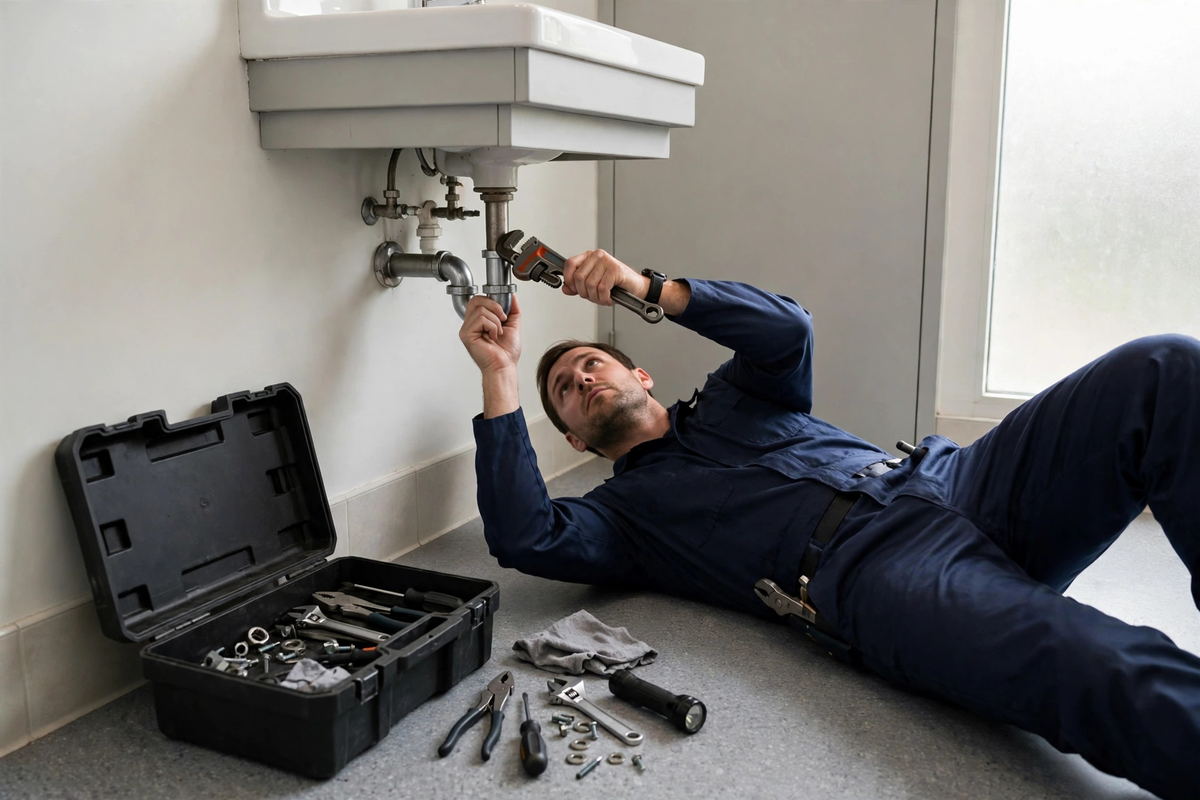
We start with the bill, the warm spots, and the meter: is water moving when every tap is off, and is the hot side or the cold side losing pressure?
Acoustic listening, pressure testing, and thermal imaging narrow the leak to a spot. The goal is one opening in the slab, not a search pattern.
A single isolated leak gets a spot repair. A failing run gets re-routed. A system that keeps leaking gets a repipe — and we explain which one your home needs.
The slab is opened at the marked point, the failed section is replaced or the new route is run, and the line is pressure-tested before the concrete is patched.
We tell you what needs drying and what to watch in the following weeks — dampness under flooring, new warm spots, or a bill that does not settle.
Sensitive microphones hear the hiss of a pressurized leak through the slab and narrow it to a few feet.
Isolating the hot and cold sides shows which line is losing pressure — and whether the leak is supply or drain.
A camera reads the warm patch a hot-line leak leaves on the floor, visible before the dampness shows.
Confirms where the slab and flooring are actually wet, so the opening lands on the leak, not the symptom.
A controlled opening at the marked point, kept as small as the repair allows.
Copper or PEX for the new route, run through walls or the attic so no water pipe sits under the slab again.
The hot-water line under the slab is leaking at an elbow, warmed by years of bentonite clay movement. Detection pins it to one spot, the slab is opened there, and the failed elbow is replaced.
The meter runs with every tap off, and pressure testing points to the cold side under the slab. The leak is isolated to one section, and a spot repair stops the loss.
Two leaks in different rooms mean the under-slab system is failing, not one joint. The honest answer is a re-route or a whole-house repipe, not another hole in the slab.
Lakewood's bentonite clay is the slab-leak driver. The soil swells when wet and shrinks when dry, and that movement works on every joint and elbow buried under the slab, year after year. Freeze-thaw cycles add seasonal stress, and spring thaw often reveals leaks that sat hidden under frozen ground. Slab-on-grade and basement homes alike can carry under-slab runs, and pre-1985 copper and galvanized pipe is the most common material found leaking.
Pre-war and mid-century homes with under-slab copper runs stressed by decades of clay movement.
1960s ranches where a warm floor over a hot-line leak is the classic first sign.
Mid-century homes with galvanized under-slab runs reaching the end of their service life.
1970s split-levels where lower-level bathrooms and laundry sit below grade over slab runs.
Older homes beside newer infill, where the era of the under-slab pipe decides the repair.
Expansive soil swells and shrinks under the slab, stressing buried joints and elbows.
Seasonal ground movement adds stress to under-slab pipe, and spring thaw reveals hidden leaks.
Copper and galvanized under-slab runs from before 1985 are the most common leakers.
Leaks hidden under frozen ground all winter often show themselves in the spring melt.
Before: a warm patch grows on the living-room floor and the water heater cycles more than it should.
After: detection pins the leak to one elbow under the slab, the section is replaced, and the floor cools to normal.
Maintenance: Watch the patched area for dampness over the next few weeks, and check the next water bill against the last.
Before: the water bill doubles with no change in use, and the meter runs with every tap off.
After: pressure testing finds the cold-side leak, a spot repair stops the loss, and the next bill settles.
Maintenance: Compare the next two bills. A bill that stays high means a second leak, not a meter problem.
Before: a second slab leak appears six months after the first, in a different room.
After: the under-slab run is abandoned and a new line is routed through the walls, so no water pipe sits under the slab.
Maintenance: A re-route is the durable answer when the system keeps failing — one more hole in the slab is not.
A slab leak is a plumbing problem with foundation consequences if it is left alone. These are the problems we see, and what each one needs.
A hot-water line leaking under the slab warms the floor above it. Detection finds the spot, and a spot repair or re-route stops it.
A supply leak under the slab can run for weeks before anything shows. The meter and pressure test find it before the floor does.
Water wicking up through the slab damages flooring and invites mildew. The leak is fixed first; drying follows.
The sound of water when nothing is running is a supply leak until proven otherwise — and the slab is the first place to check.
One leak is a spot repair. Several leaks mean the under-slab system is failing, and the answer is a re-route or a repipe.
The expensive mistake with a slab leak is opening concrete before knowing where the leak is. Detection is the job; the repair is the easy part.
Emergency Plumber Lakewood holds a 5.0-star rating from 9 Google reviews. Homeowners across Lakewood call us when a main line fails, a water heater quits, or a drain will not clear — and the reviews describe the same things we aim for on every visit: a clear explanation of what is wrong, the options before work starts, and a clean job site when we leave. Call (720) 909-6690 — open 24 hours, every day — to talk through what is happening at your home.
The usual signs are a warm patch on the floor, a water bill that jumps with no change in use, damp carpet or buckling flooring, the sound of running water when every tap is off, or a water heater that cycles more than it should. Any one of these is worth a detection visit.
No. Detection narrows the leak to a spot first, and the slab is opened at that one point for a spot repair. A re-route avoids the slab entirely by running the new line through walls or the attic.
Expansive bentonite clay under the slab swells when wet and shrinks when dry, stressing the joints and elbows of buried pipe. Freeze-thaw cycles add to it, and pre-1985 copper and galvanized runs are the most common leakers.
When leaks keep appearing in different rooms. One isolated leak is a spot repair; several leaks mean the under-slab system is failing, and a re-route or whole-house repipe is the durable answer — see our repiping page.
Not seeing your question? Call (720) 909-6690 — open 24 hours, every day — and talk it through with the local team.
Ask the local teamReach us any hour at (720) 909-6690. Tell us about the warm spot, the bill, or the damp floor, and we will talk through the next step.